Description
16 Interactive Boom Card Decks | 4 Instructional Groups | Explicit Teaching + Structured Practice
See the free interactive preview here!
Social communication skills can be difficult to teach—especially when you’re trying to explain them in the middle of a social situation.
A student might struggle to recognize another person’s perspective, understand an indirect request, interpret a social interaction, or find a solution that considers someone else’s needs.
We can often identify the skill that’s missing. The harder part is breaking that skill down into something we can actually teach.
That’s why I created the Social Communication & Thinking Skills COMPLETE Bundle.
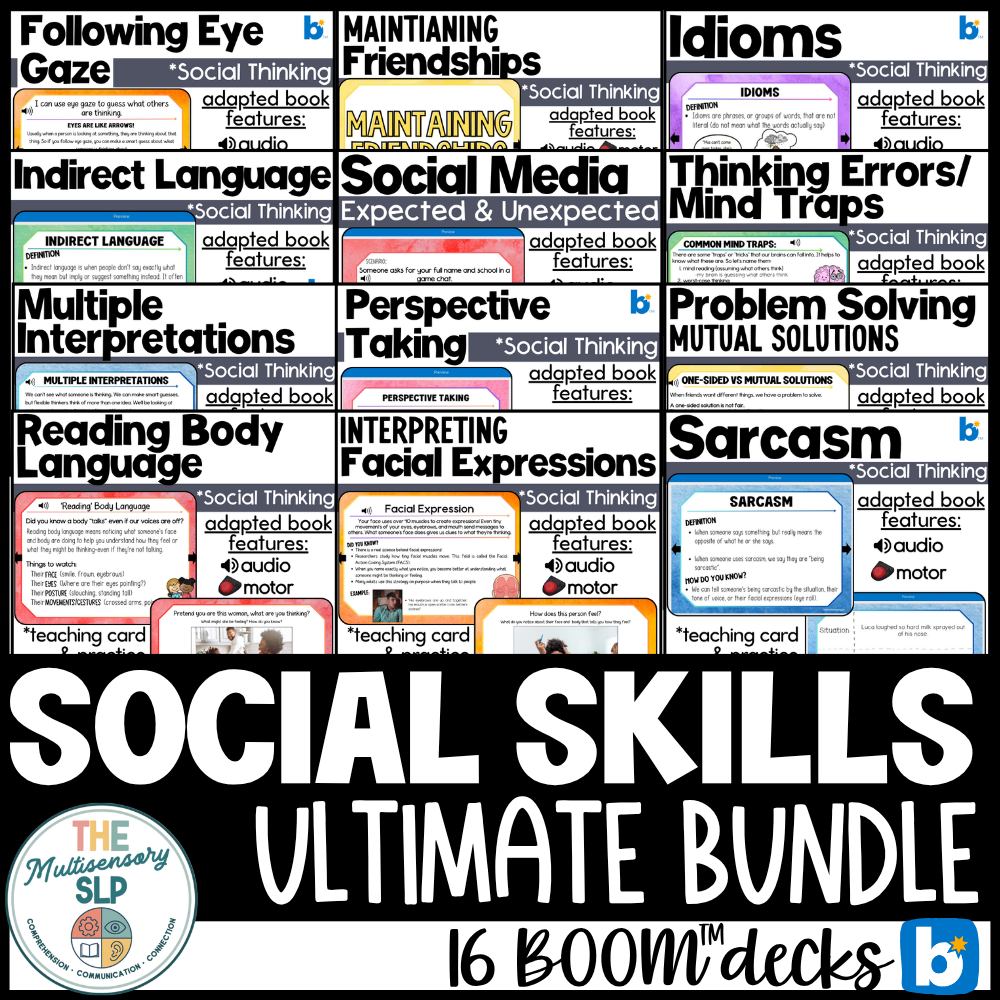
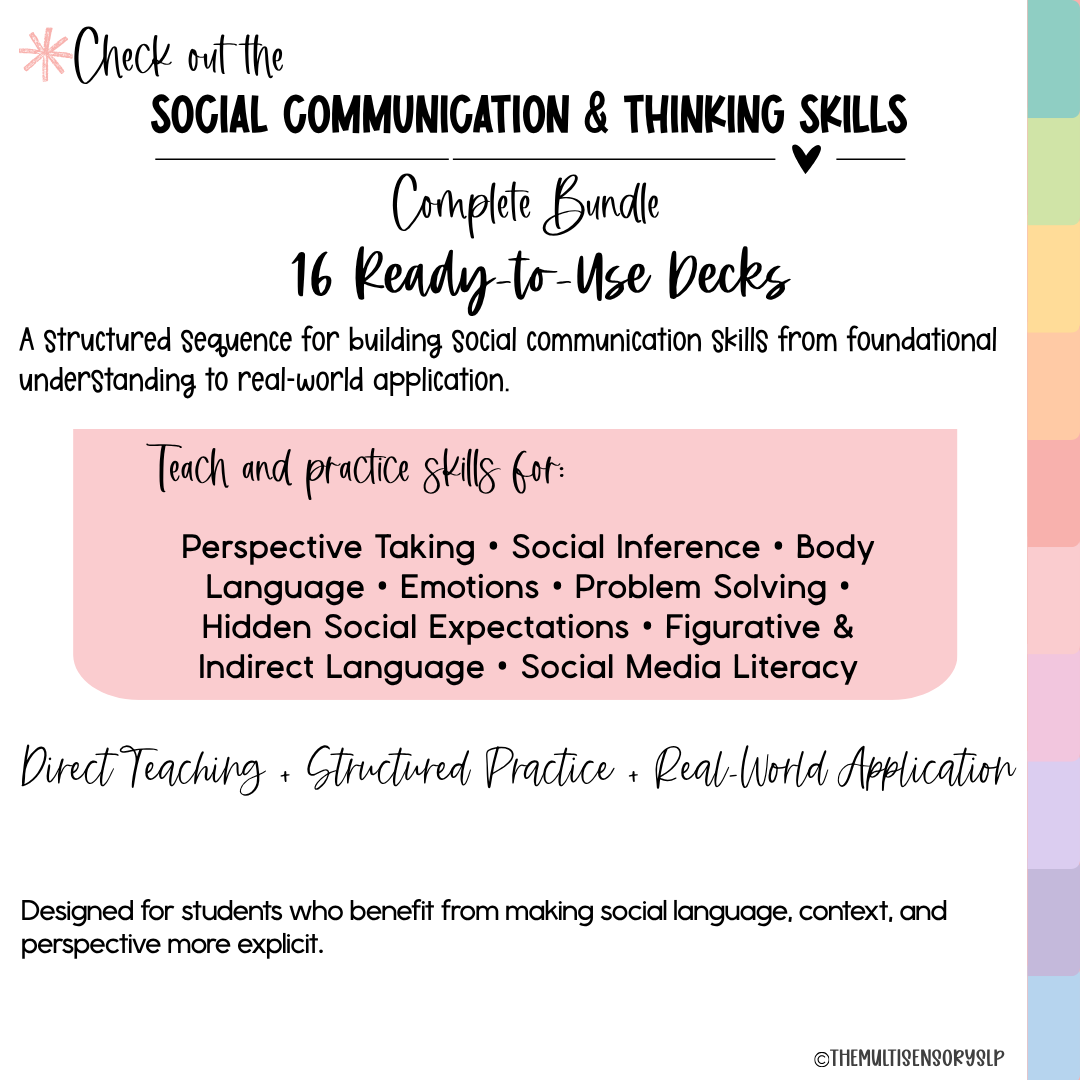
This collection includes 16 ready-to-use Boom Card decks targeting perspective taking, social inferencing, pragmatic language, flexible thinking, problem solving, nonverbal communication, and higher-level language comprehension.
Rather than expecting students to already understand these concepts, each deck introduces a targeted skill through direct teaching and examples before providing structured opportunities to practice.
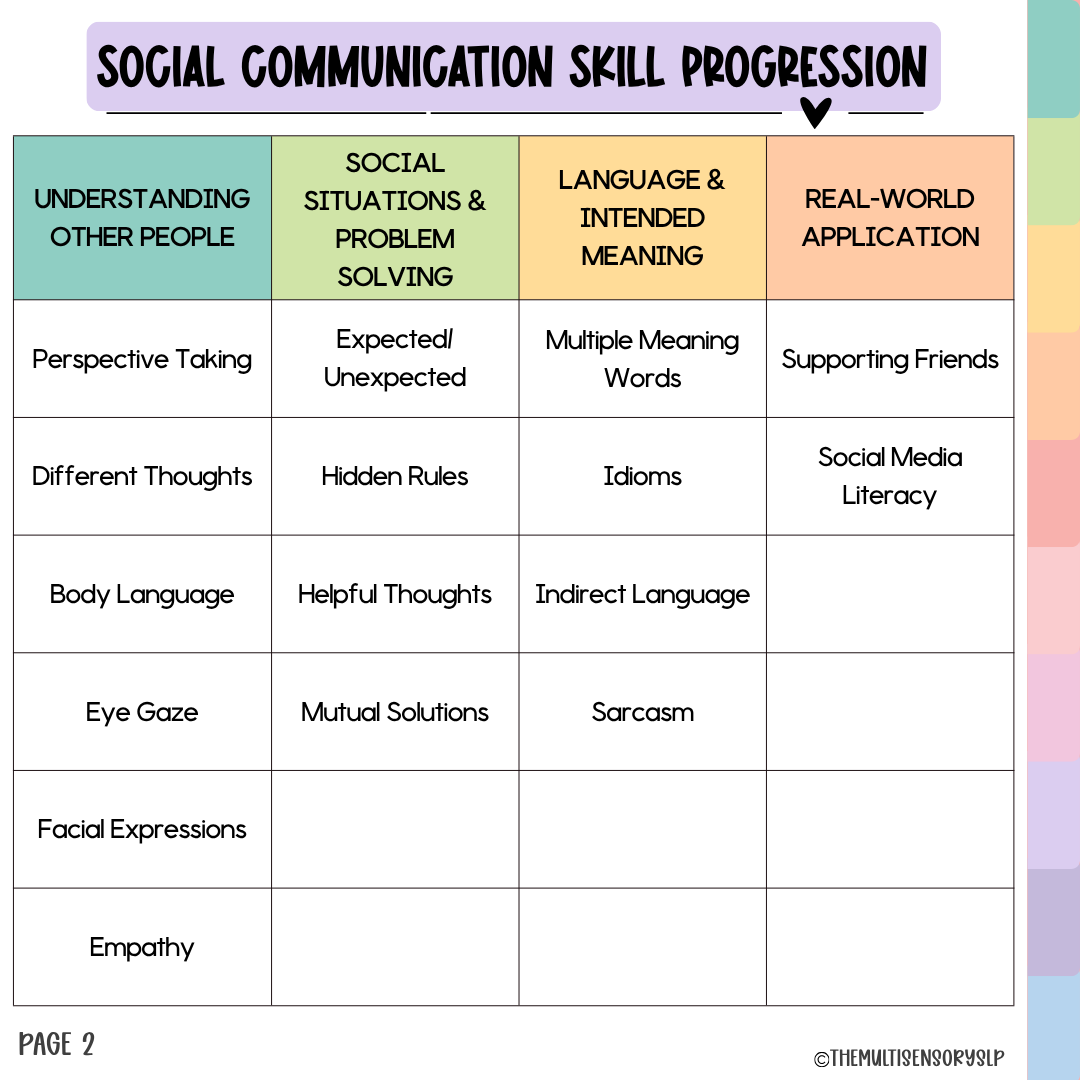
A SOCIAL COMMUNICATION SKILL PROGRESSION
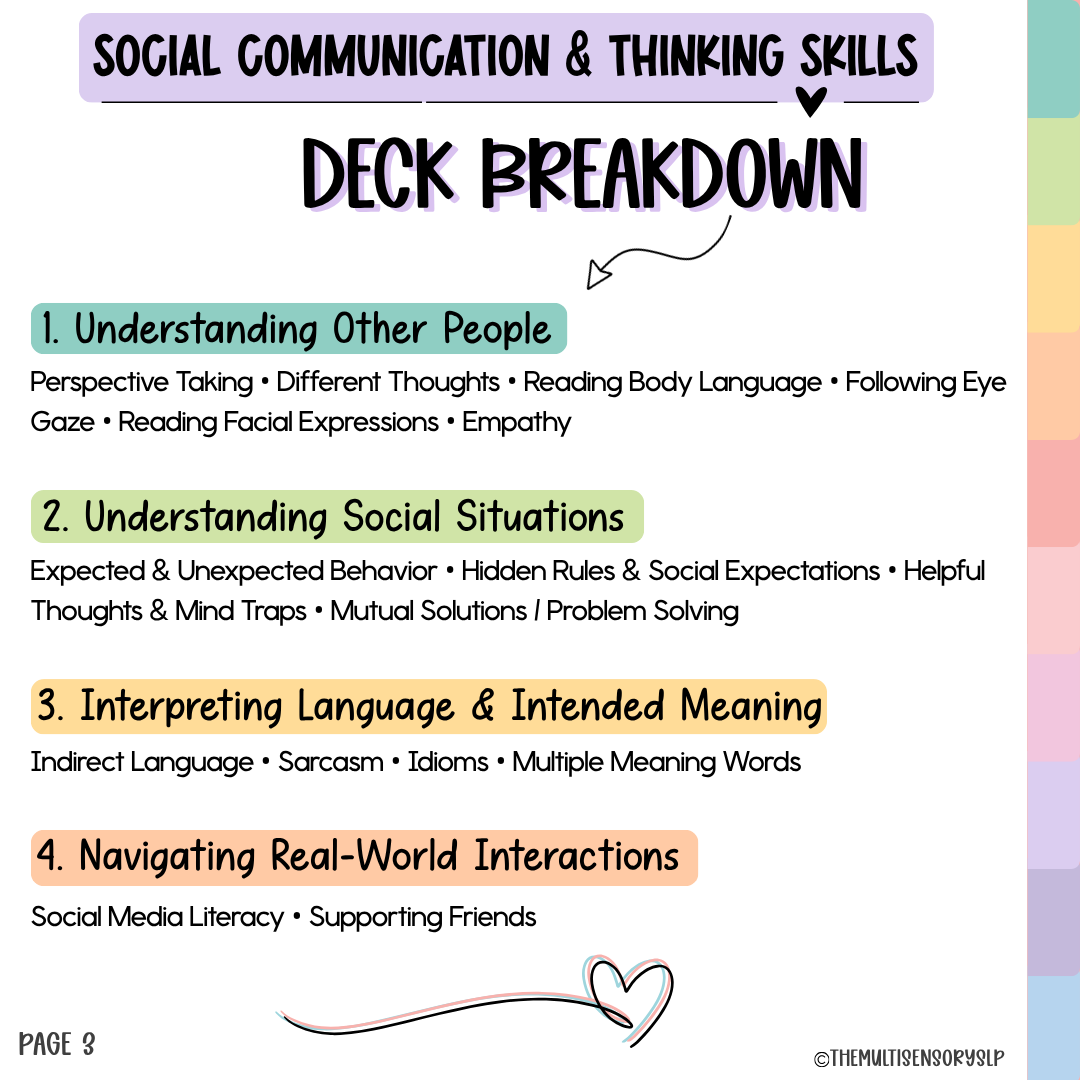
16 Teaching Decks • 4 Instructional Groups
A structured approach that builds from foundational social understanding to real-world communication. The decks are organized into four related instructional groups, making it easier to identify which underlying skills students may need help developing.
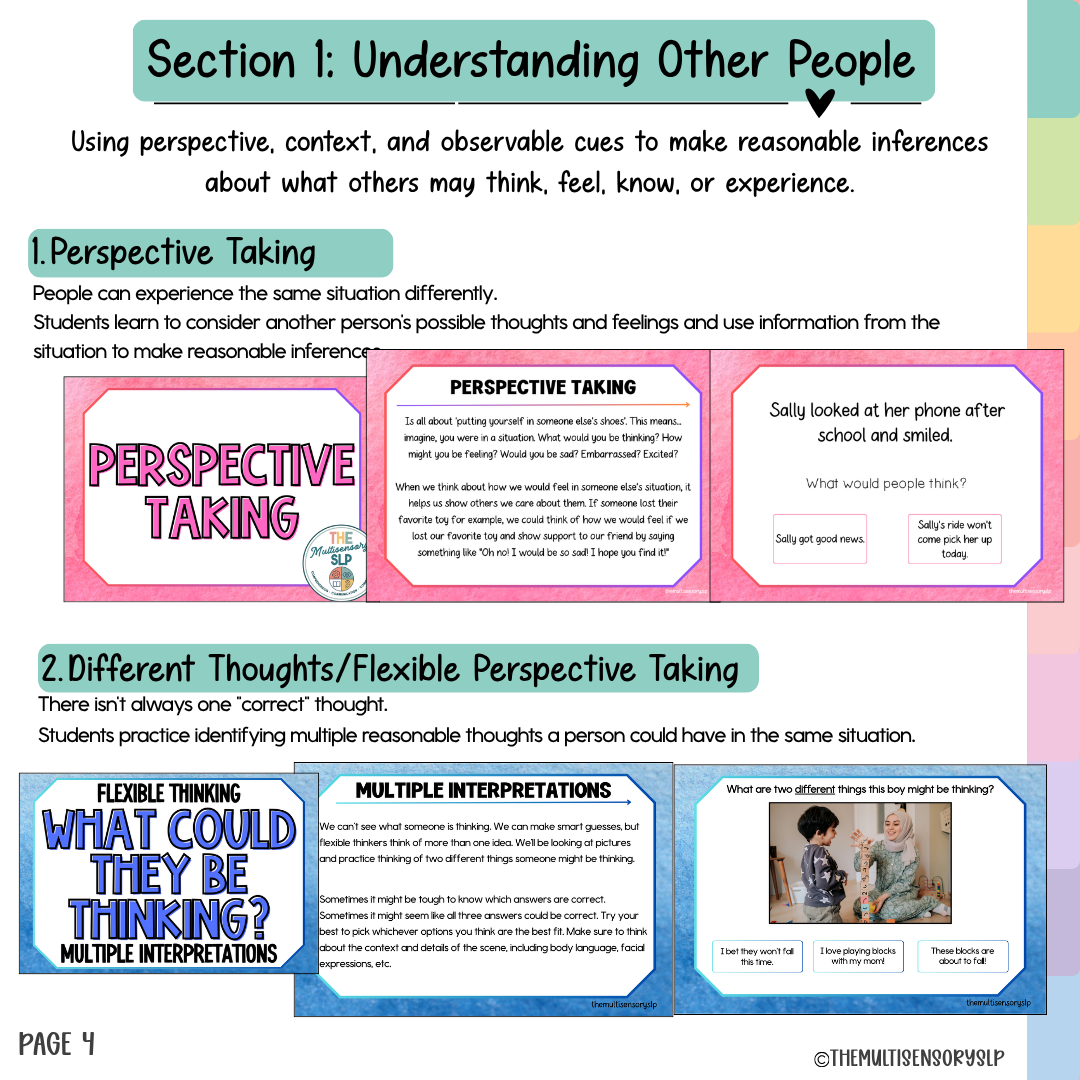
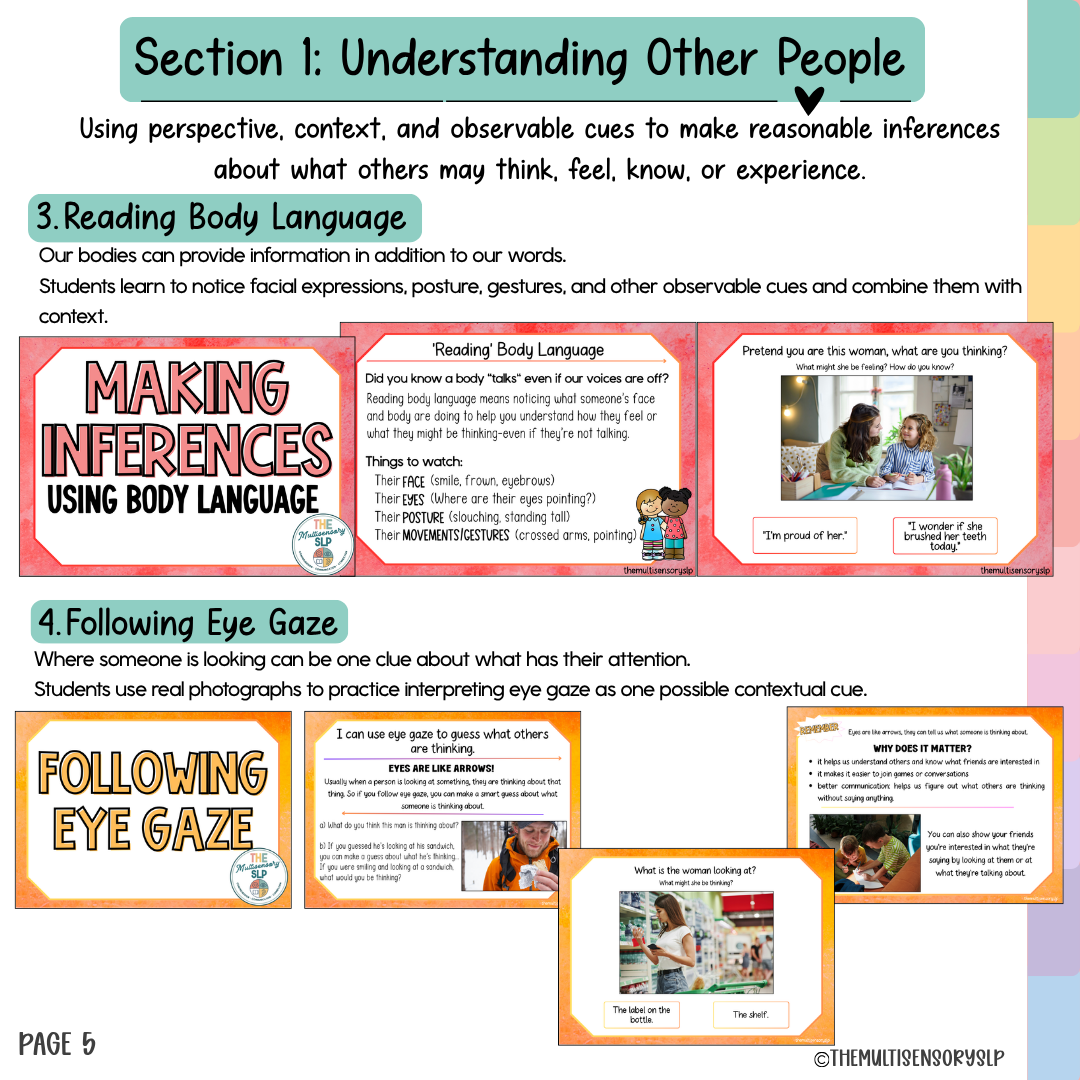
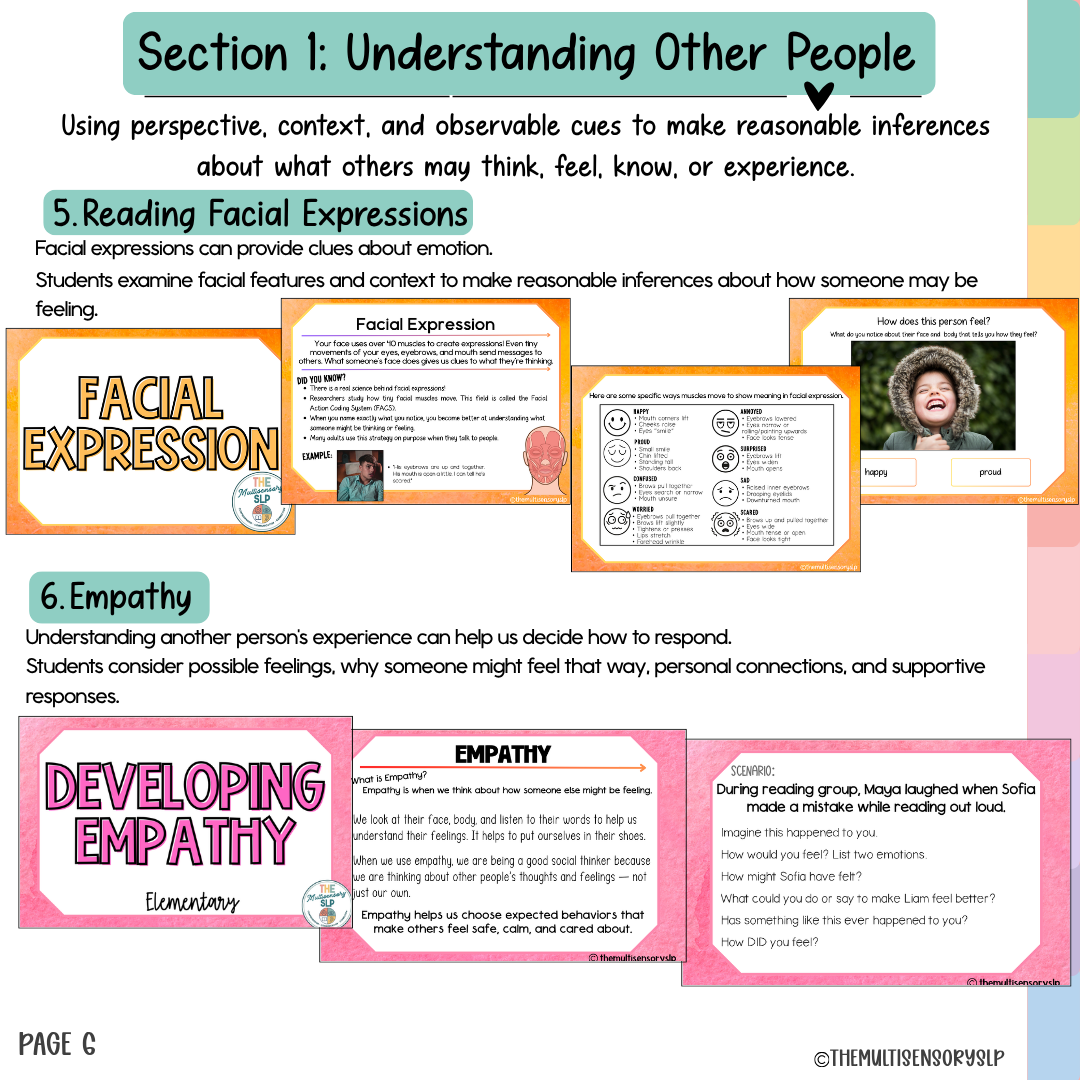
GROUP 1: UNDERSTANDING OTHER PEOPLE
Using perspective, context, and observable cues to make reasonable inferences about what others may think, feel, know, or experience.
- Perspective Taking – Understand that people can experience the same situation differently.
- Multiple Interpretations – Consider more than one reasonable thought or explanation.
- Reading Body Language – Use posture, gestures, and contextual information to make social inferences.
- Following Eye Gaze – Notice eye direction as one possible clue about another person’s attention.
- Interpreting Facial Expressions – Examine facial features and context to consider possible emotions.
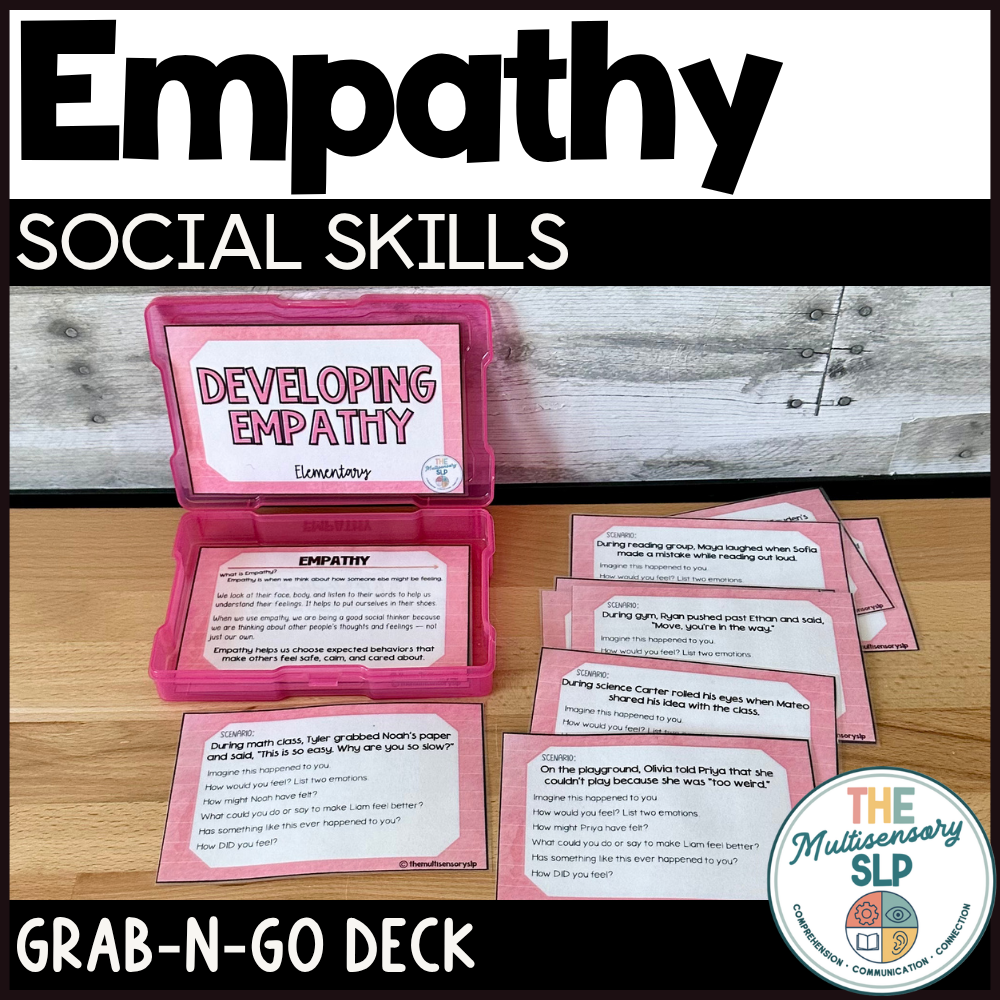
- Developing Empathy – Consider another person’s experiences, feelings, and possible supportive responses.
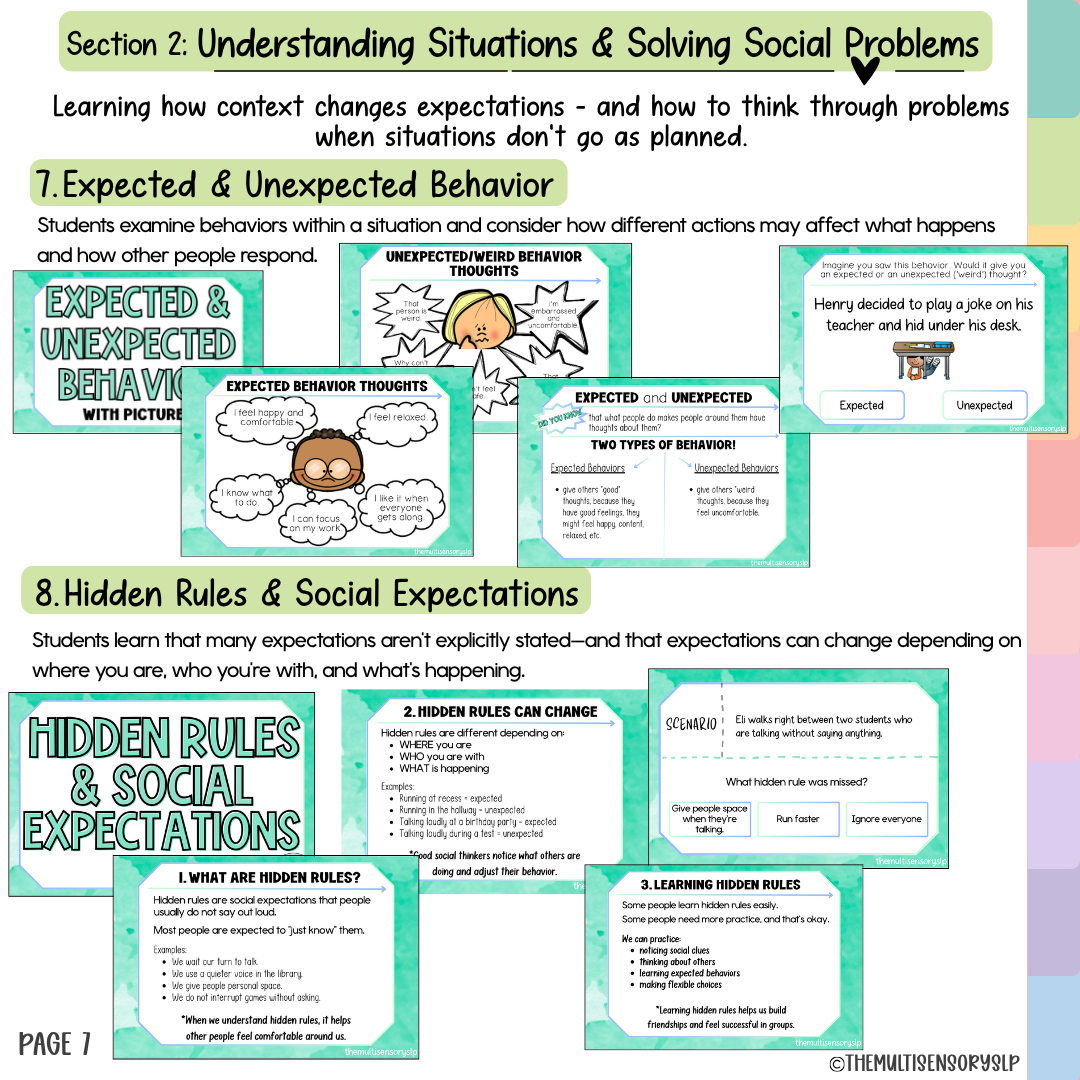
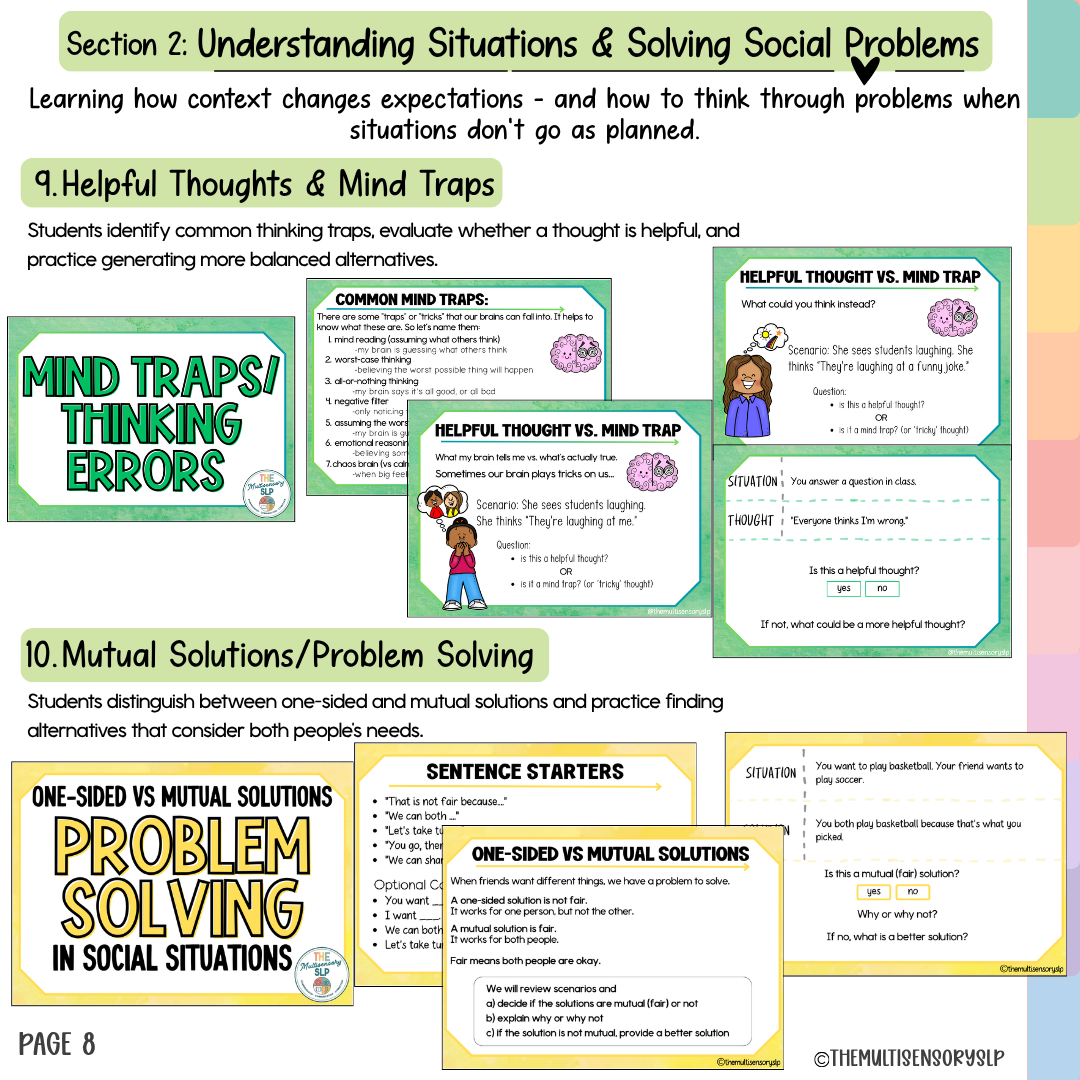
GROUP 2: UNDERSTANDING SITUATIONS & SOLVING SOCIAL PROBLEMS
Learning how context changes expectations—and how to think through problems when situations don’t go as planned.
- Expected & Unexpected Behavior – Examine behaviors within social situations and consider possible effects on others.
- Hidden Rules & Social Expectations – Understand unwritten expectations and how they change across settings.
- Helpful Thoughts & Mind Traps – Recognize thinking errors, question assumptions, and consider balanced alternatives.
- Mutual Solutions / Social Problem Solving – Distinguish one-sided solutions from solutions that consider both people’s needs.
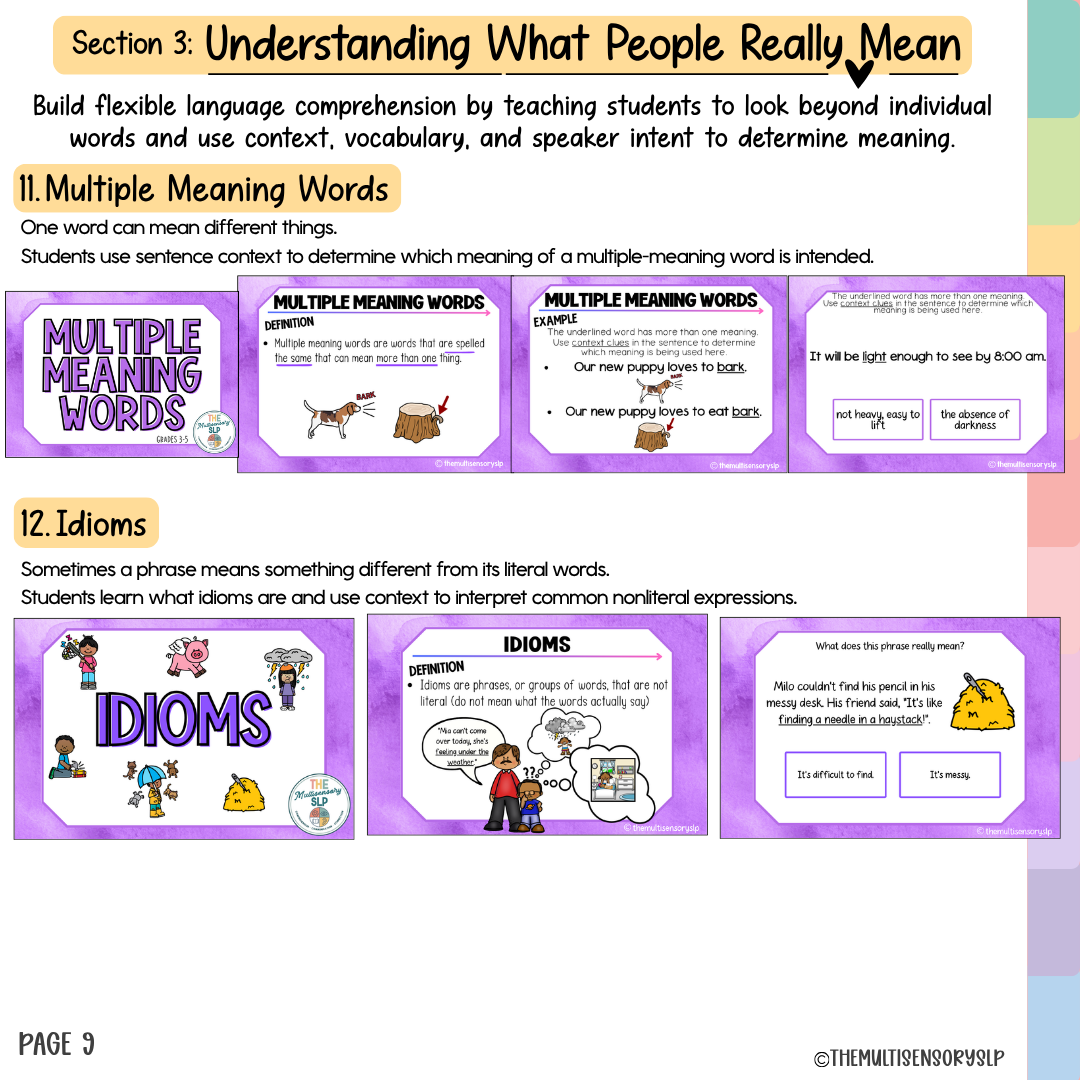
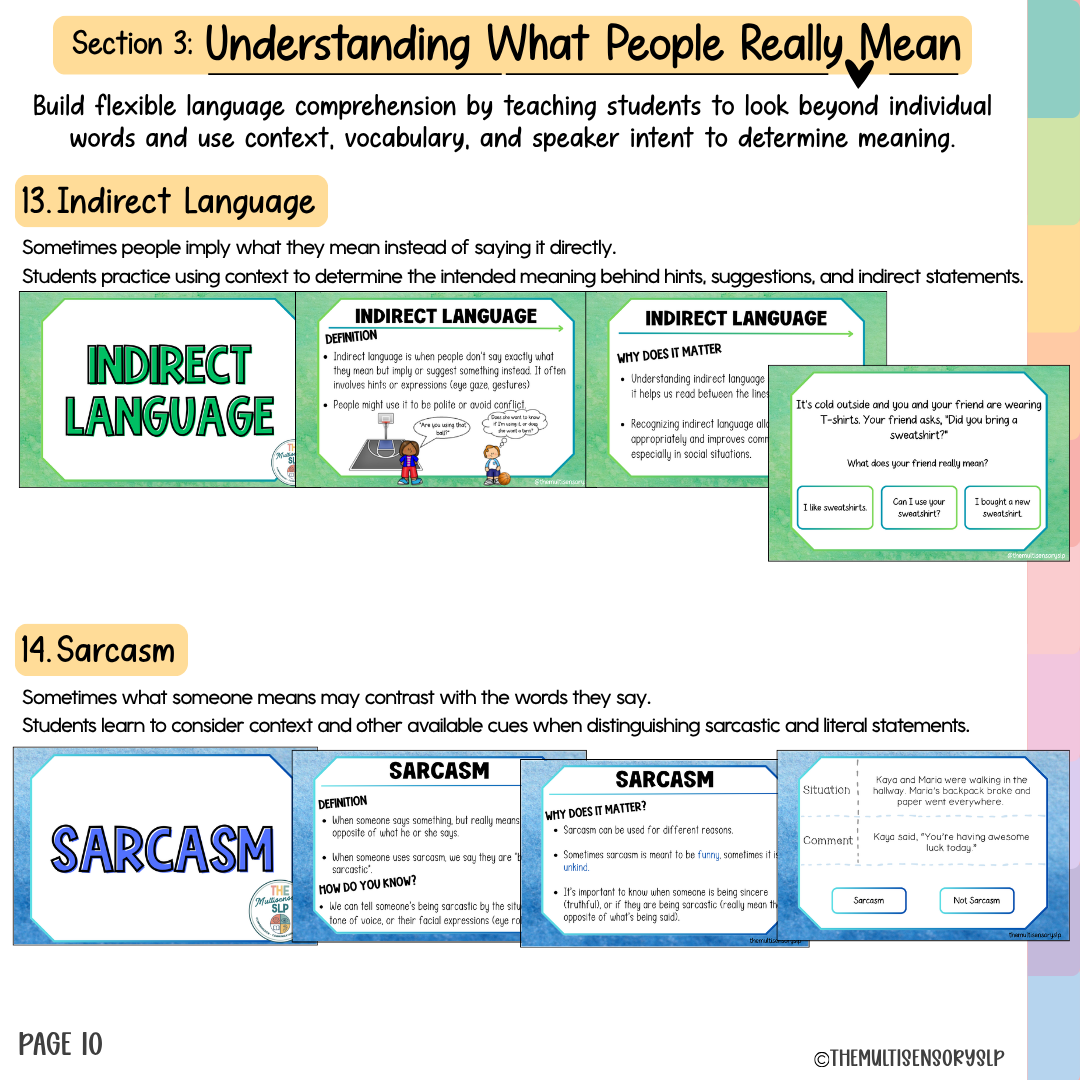
GROUP 3: UNDERSTANDING WHAT PEOPLE REALLY MEAN
Building flexible language comprehension by using context, vocabulary, and speaker intent to determine meaning.
- Multiple Meaning Words – Use sentence context to identify the intended meaning of words with multiple definitions.
- Idioms – Understand common expressions that mean something different from their literal words.
- Indirect Language – Interpret hints, suggestions, implied requests, and unstated meanings.
- Sarcasm – Use context and available cues to distinguish sarcastic statements from sincere ones.
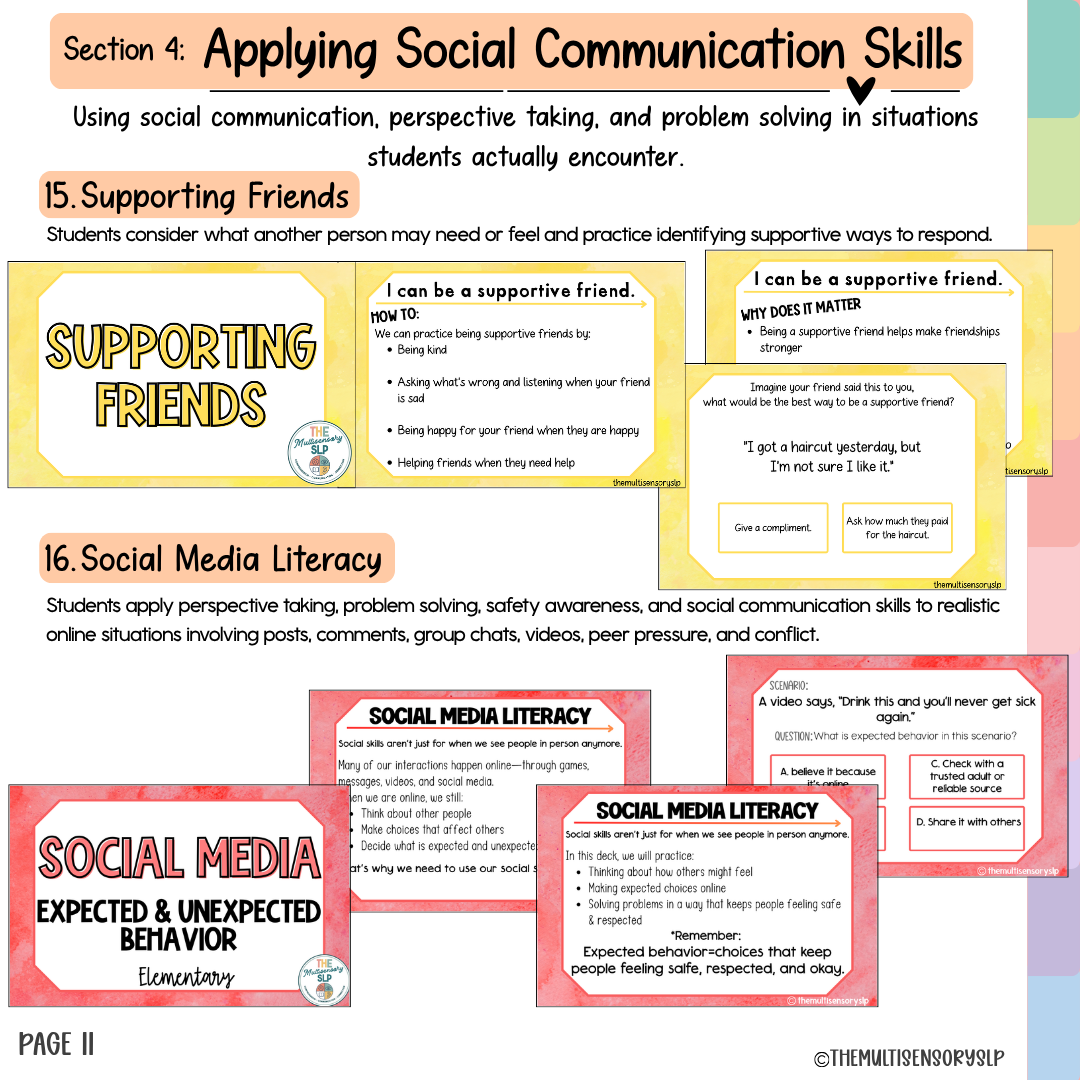
GROUP 4: NAVIGATING REAL-WORLD INTERACTIONS
Applying social reasoning, language comprehension, and problem-solving skills to everyday relationships and digital communication.
- Social Media – Practice interpreting online messages, considering different perspectives, and making thoughtful communication decisions.
- Maintaining Friendships / Supporting Friends – Navigate friendship challenges, consider others’ needs, and identify supportive responses.
WHY EXPLICIT INSTRUCTION MATTERS
Social communication involves much more than memorizing social rules.
Students need opportunities to understand why a response might make sense, how context changes meaning, and what information they can use when interpreting a situation.
Many of these concepts are abstract. Telling a student to “think about how someone else feels” or “read between the lines” may not provide enough information for them to understand what to do.
These decks help make the underlying thinking more visible.
Each targeted skill is introduced through direct teaching, supported with examples, and followed by structured practice so students can begin applying what they’ve learned.
SKILLS TARGETED
- Social communication and pragmatic language
- Perspective taking and social inferencing
- Understanding nonverbal communication
- Emotional understanding and empathy
- Flexible thinking and social reasoning
- Social expectations and situational awareness
- Social problem solving and conflict resolution
- Figurative, indirect, and nonliteral language
- Context clues and higher-level language comprehension
- Friendship and relationship skills
- Social-emotional learning (SEL)
DESIGNED FOR FLEXIBLE INSTRUCTION
Although the collection is organized into a suggested instructional progression, students do not need to complete the decks in a specific order.
Start with the skill that is creating the greatest barrier for your student, then use related decks to expand instruction as needed.
This bundle is especially useful for:
- School-based speech-language therapy
- Pragmatic language intervention
- Social communication groups
- Special education instruction
- Individual or small-group intervention
- Upper elementary and middle school language support
- Social-emotional learning activities
16 targeted decks. Four instructional groups. A connected approach to teaching social communication.
Give students more than opportunities to practice skills they’re already expected to know. Give them the explicit instruction they need to understand, develop, and apply those skills.
To use Boom Cards, you must be connected to the Internet. Boom Cards play on modern browsers (Chrome, Safari, Firefox, and Edge). Apps are available for modern Android, iPads, iPhones, and Kindle Fires. For security and privacy, adults must have an account to use and assign Boom Cards. You will be able to assign the Boom Cards you are buying with “Fast Pins” (a form of play that gives instant feedback to students for self-grading Boom Cards). For assignment options that report student progress back to you, you will need to purchase a subscription. If you are new to Boom, you will be offered a free trial. Read here for details: http://bit.ly/BoomTrial.
Reviews
There are no reviews yet.