Description
AAC Staff Training & Implementation Toolkit
AAC staff training doesn’t have to mean creating another PD from scratch!
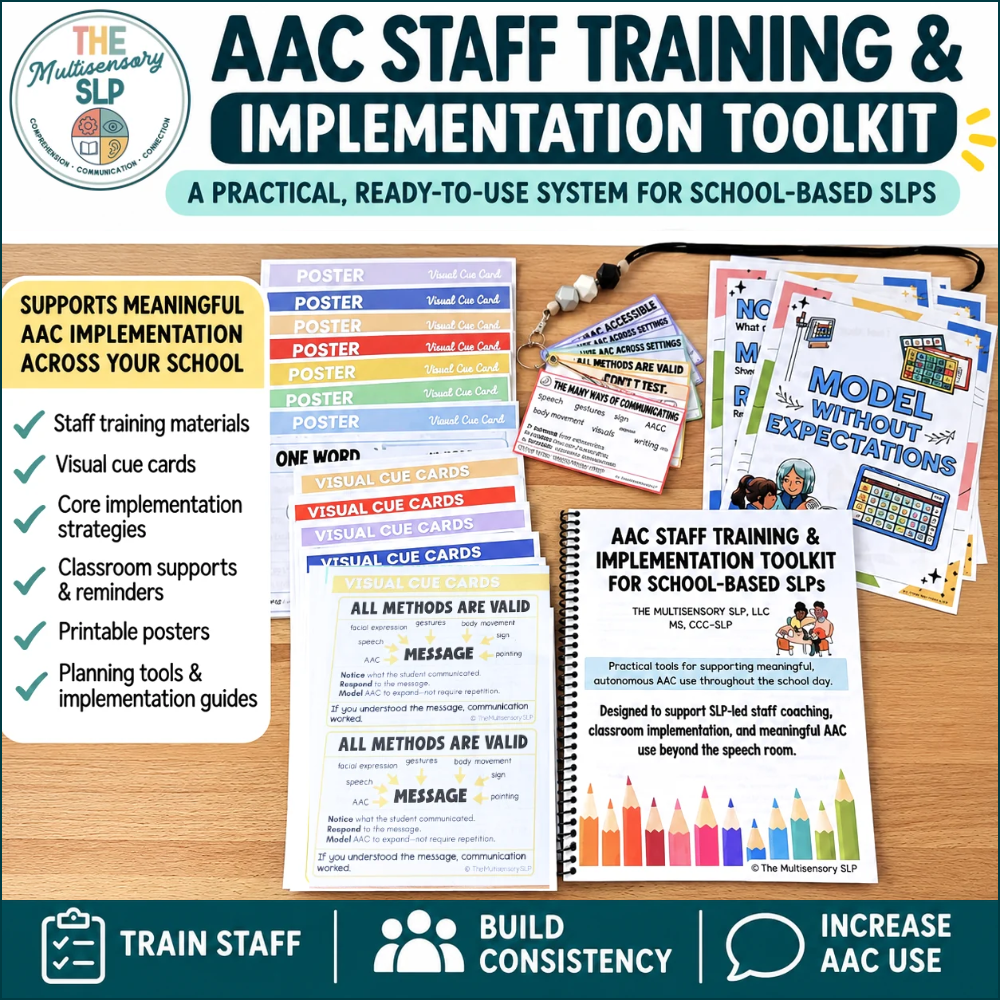
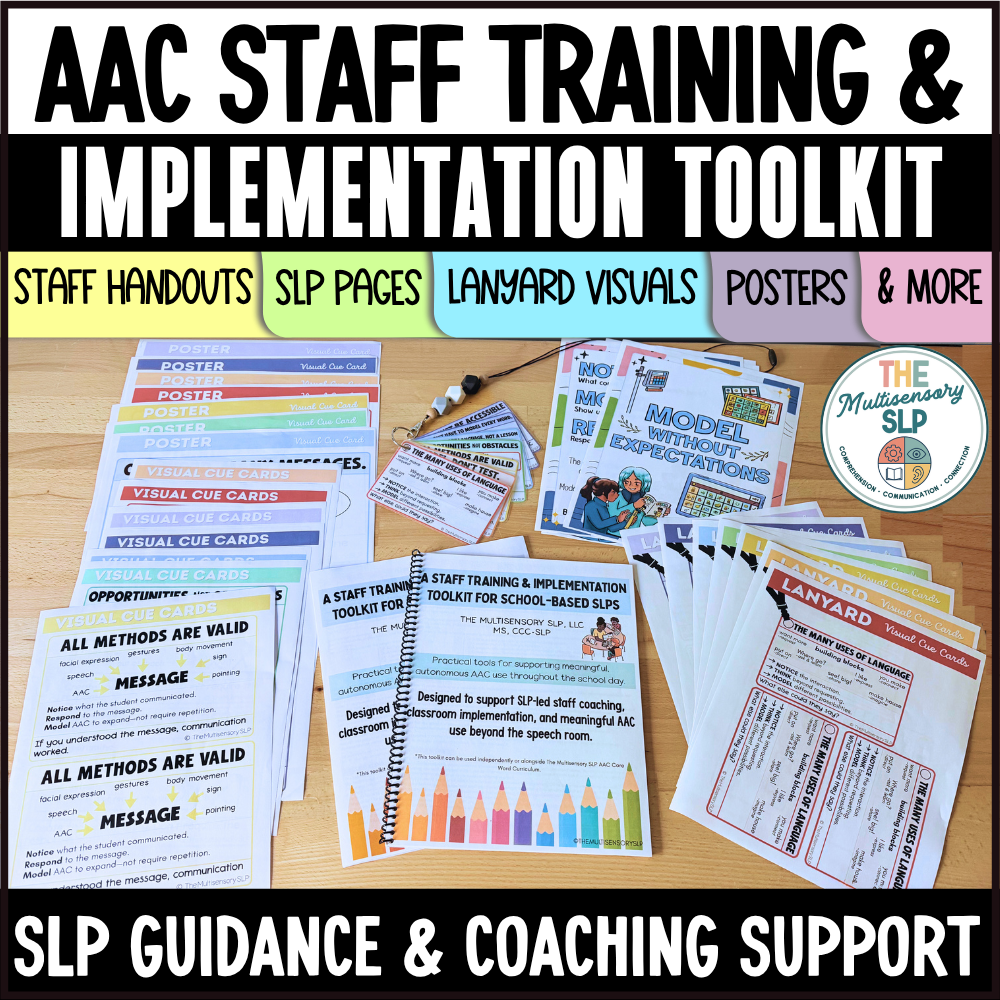
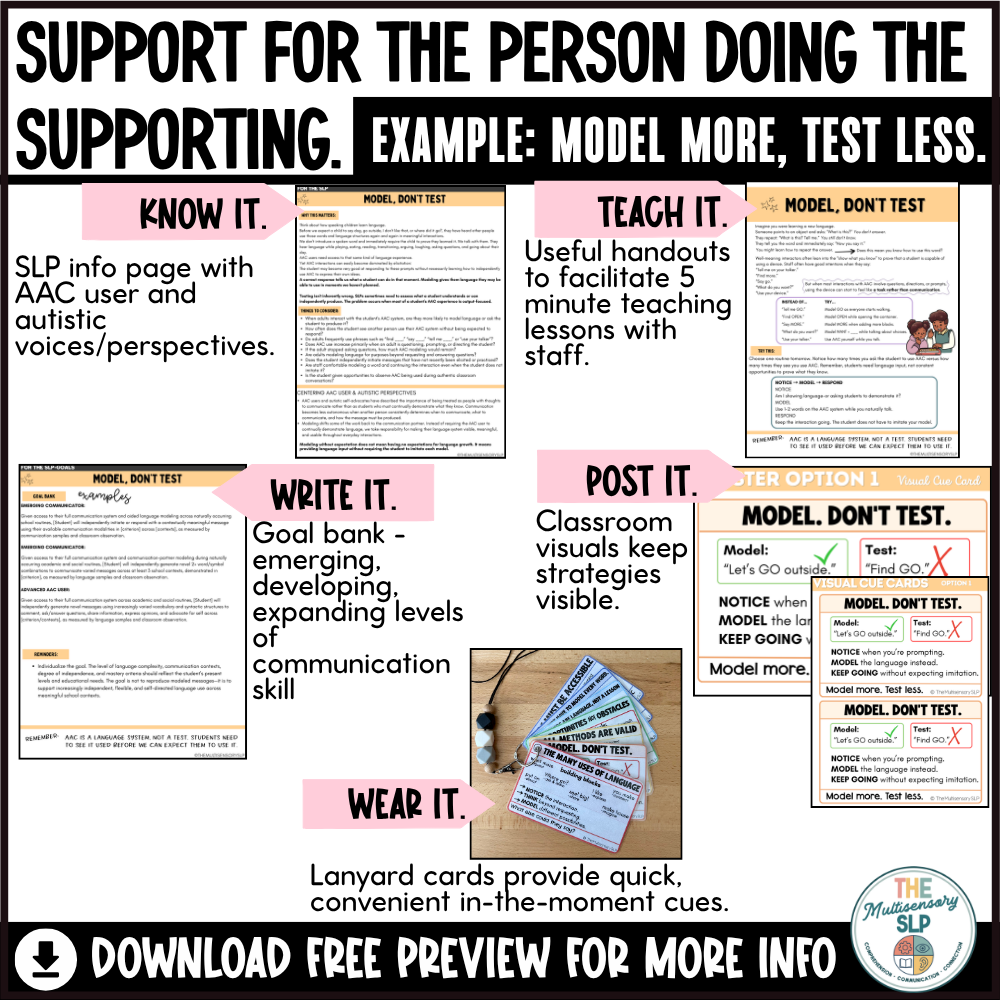
This AAC Staff Training & Implementation Toolkit gives school-based SLPs ready-to-use staff training pages, SLP guidance, IEP goal examples, lanyard cards, visual supports, and classroom posters for building meaningful AAC use across the school day.
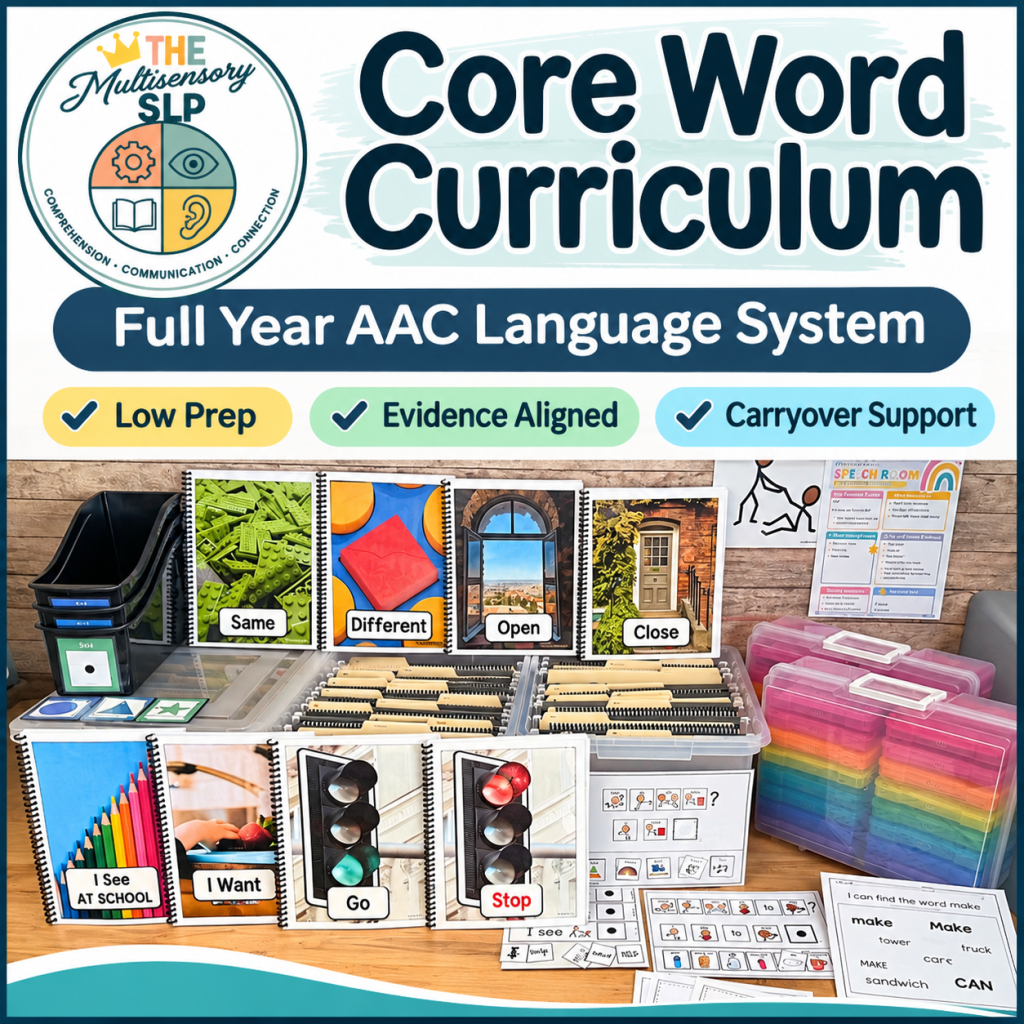
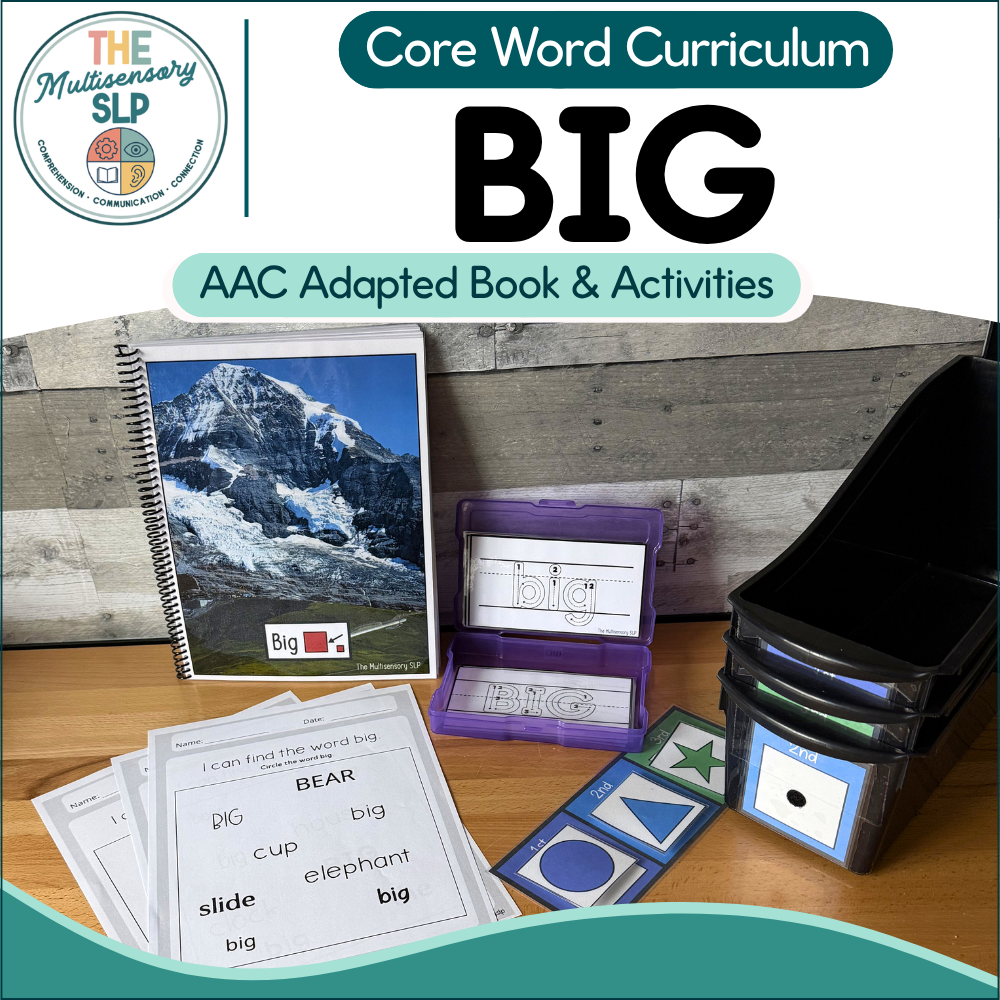
Created as a natural companion to the AAC Core Word Curriculum, this resource shifts the focus from what to teach to how we build communication-supportive environments around AAC users. It can also be used completely independently with any robust AAC system or approach.
AAC implementation shouldn’t rest on the SLP alone.
You may know what meaningful AAC support can look like. The harder part is helping an entire school team understand it—and actually carry it into classrooms, transitions, play, lunch, recess, and the rest of a busy school day.
This toolkit gives you practical, ready-to-use tools for building that shared understanding without creating another extensive professional development program to plan and deliver.
Use one section for a quick conversation with a paraeducator. Bring a staff-facing page to a team meeting. Leave a visual reminder in the classroom. Use the SLP-facing pages to guide coaching, reflection, goal writing, and problem-solving.
Start where your team needs support. Come back for the next piece when you need it.
7 Focused AAC Training Topics
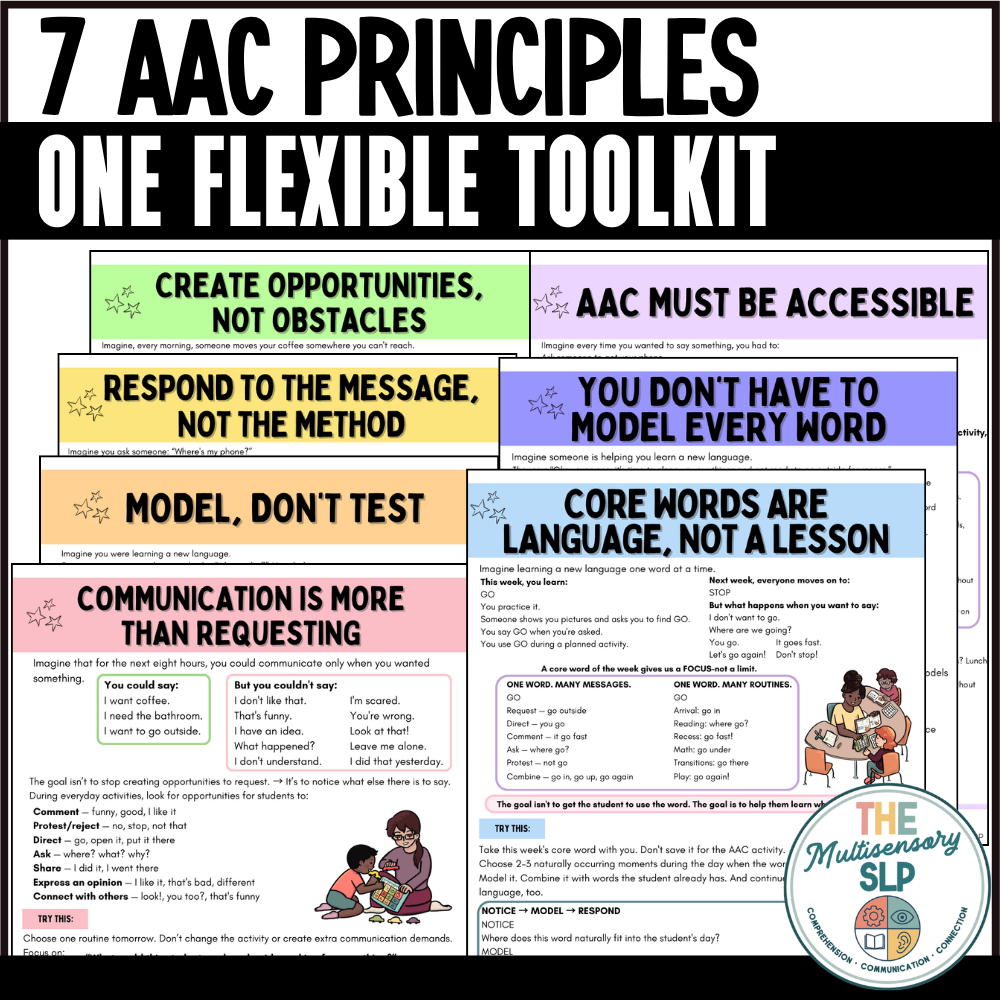
This resource addresses seven foundational principles for meaningful AAC implementation:
Communication Is More Than Requesting
Expand communication beyond requesting to commenting, directing, connecting, questioning, expressing, imagining, and sharing.
Model, Don’t Test
Shift from asking students to demonstrate AAC vocabulary toward providing meaningful aided language input.
Respond to the Message, Not the Method
Recognize and respond to multimodal communication while using AAC to expand language.
Create Opportunities, Not Obstacles
Recognize authentic reasons to communicate without making access or participation dependent on producing a target message.
Core Words Are Language, Not a Lesson
Move core vocabulary beyond isolated “word of the week” practice and into flexible, meaningful language across the school day.
You Don’t Have to Model Every Word
Help communication partners make aided language modeling realistic and sustainable by modeling meaningful words rather than reproducing every spoken word.
AAC Must Be Accessible
Consider availability, positioning, physical access, functionality, robust vocabulary, and consistent communication access across settings.
What’s Included
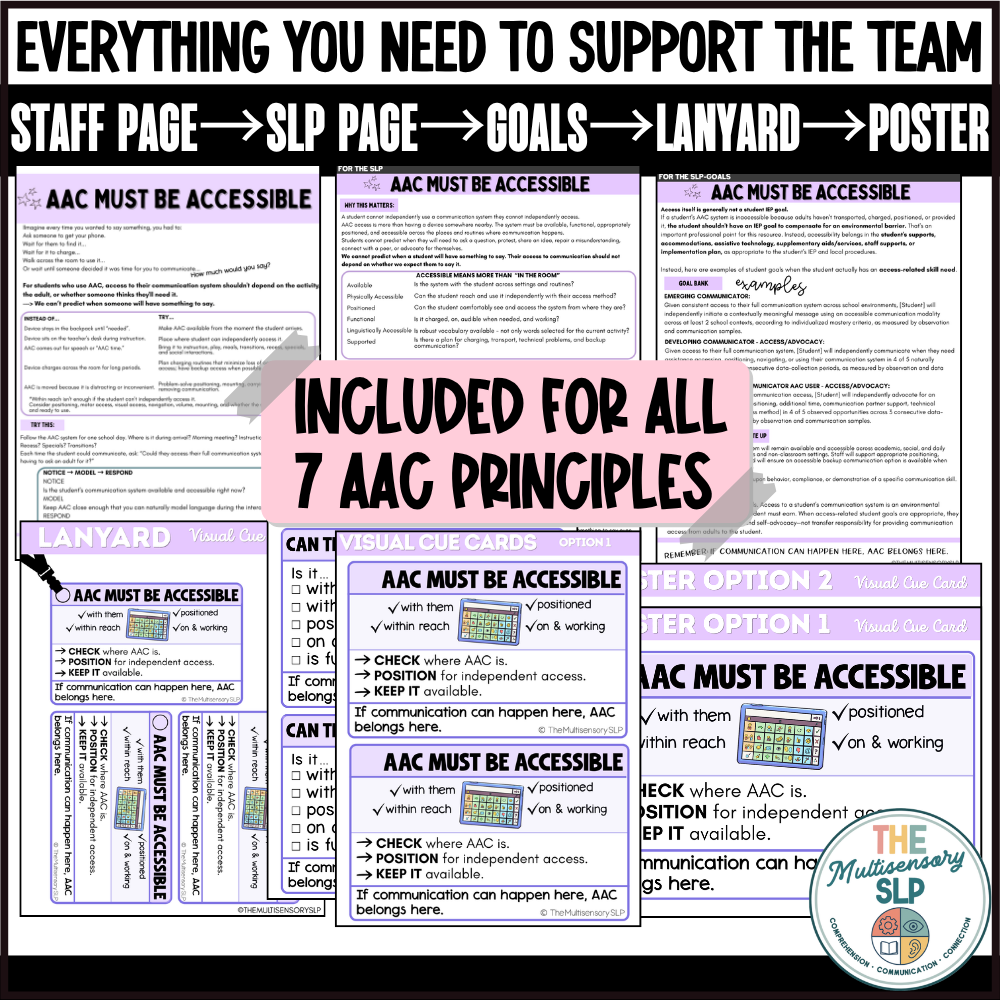
Each training topic includes tools designed for both professional learning and real-world implementation:
Staff-Facing Training Pages
Concise, approachable explanations that translate AAC principles into practical actions for teachers, paraeducators, and other communication partners.
SLP-Facing Professional Guidance
Deeper discussion of the rationale behind each principle, considerations for observation and coaching, and prompts to support clinical decision-making.
AAC User & Autistic Perspectives
Lived-experience perspectives are intentionally incorporated alongside professional considerations to support communication practices grounded in autonomy and respect.
IEP Goal Examples
Sample goals across communication levels, with guidance for individualizing targets based on the student’s present levels, communication needs, educational contexts, and level of independence.
Lanyard Cards & Quick-Reference Visuals
Glanceable implementation cues staff can keep accessible throughout the school day.
Classroom Posters
Visual reminders designed to keep meaningful AAC practices visible after the training conversation ends.
Built Around a Simple Framework
Throughout the resource, staff return to three actions:
NOTICE
What could the student communicate here?
MODEL
Show useful language as it naturally fits.
RESPOND
Respond to what the student communicates.
The goal isn’t to add another AAC activity to the schedule.
Build AAC into the day—not on top of it.
Designed For
This toolkit was created for school-based SLPs supporting AAC users and the teams around them, including:
• Special education teachers
• General education teachers
• Paraeducators
• Related-service providers
• Other school communication partners
Use it for individual student teams, staff coaching, consultation, team meetings, classroom carryover, AAC implementation planning, or your own professional reference.
Flexible by Design
You do not need to present all seven sections or create a multi-week training series.
Choose the principle that addresses what you’re seeing. Share the corresponding staff support. Leave behind the visual tools. Revisit or add another principle when the team is ready.
Because sustainable AAC implementation isn’t something one SLP can provide during isolated therapy sessions.
Using the AAC Core Word Curriculum?
Pair the curriculum’s structured core-word instruction with this toolkit’s staff education and implementation supports to help carry language beyond direct intervention and into everyday school interactions.
[VIEW THE AAC CORE WORD CURRICULUM]
Reviews
There are no reviews yet.