Description
Build sequencing, narrative retelling, and social understanding skills through familiar school situations!
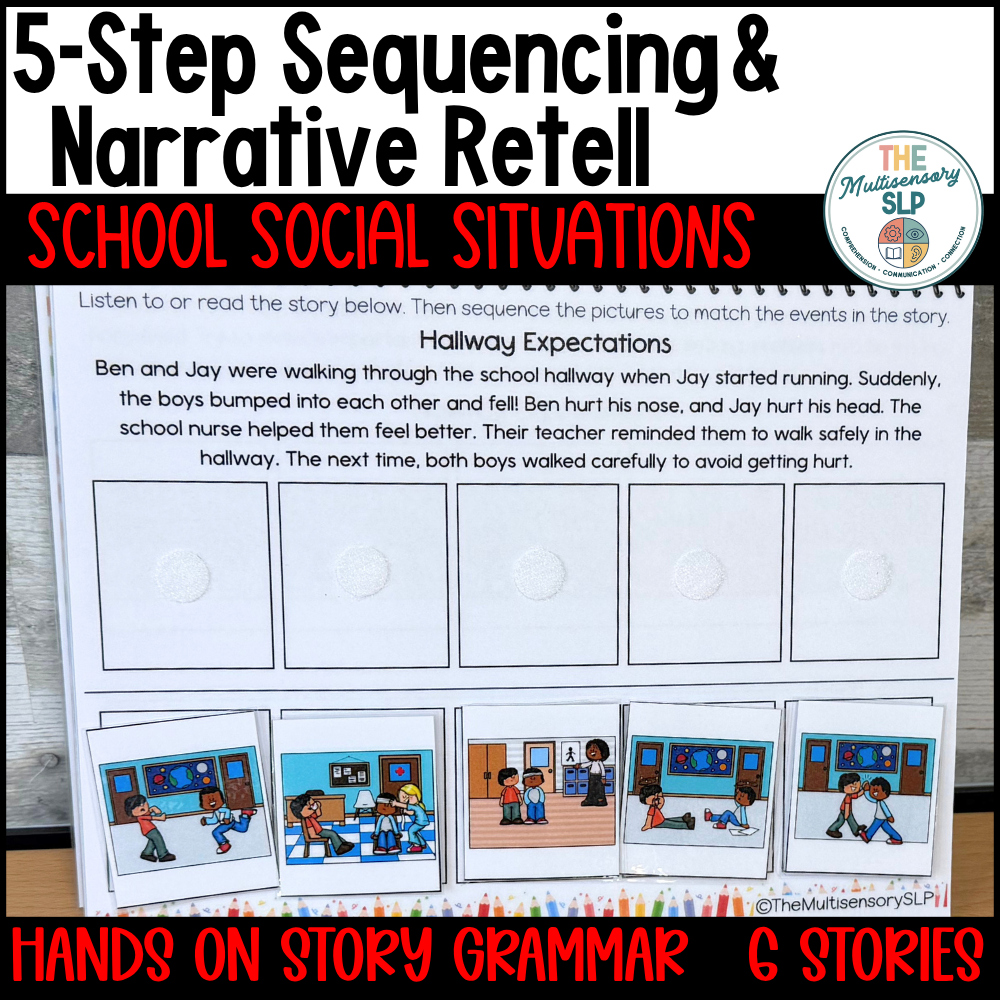
This printable Around School 5-Step Sequencing & Narrative Retell resource combines narrative language instruction with everyday school expectations. Students practice sequencing events, identifying cause-and-effect relationships, and retelling stories while exploring situations they may encounter throughout the school day.
Each story presents a familiar school scenario, such as hallway expectations or lunchroom behavior, and helps students recognize how characters’ actions affect what happens next.
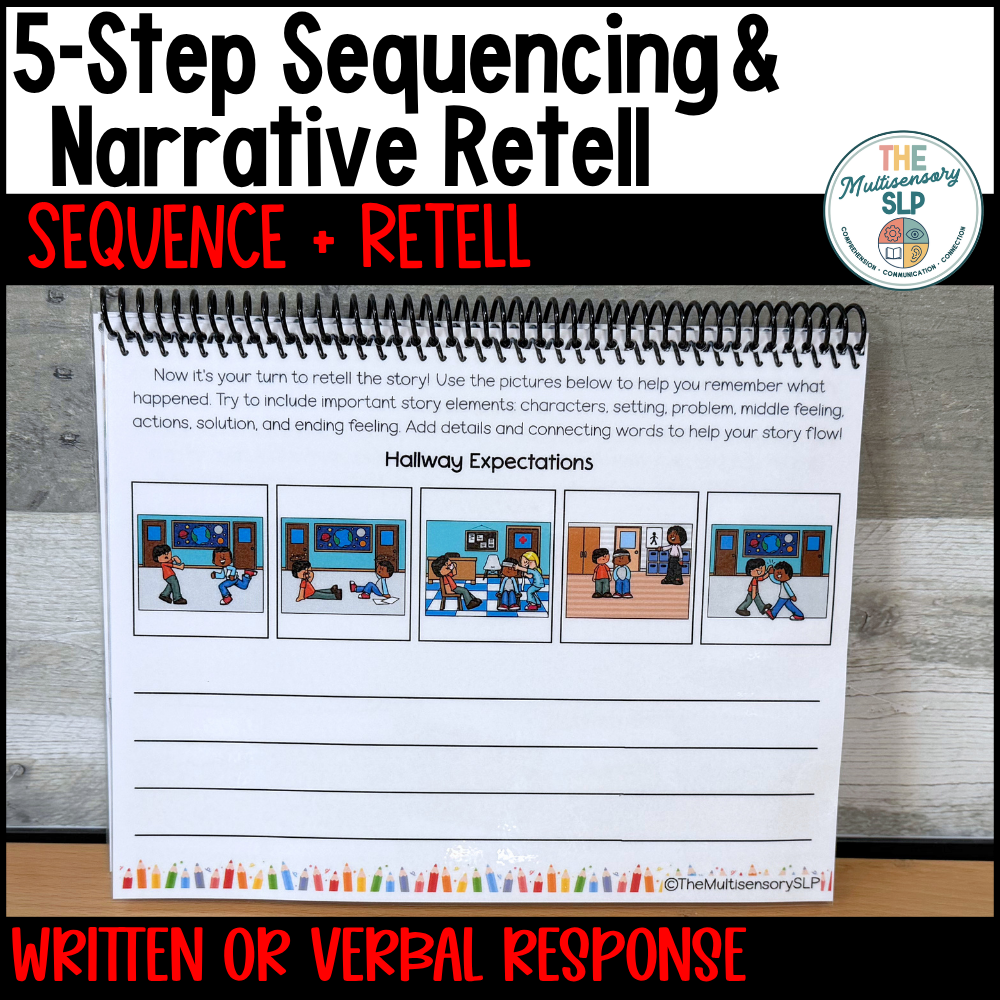
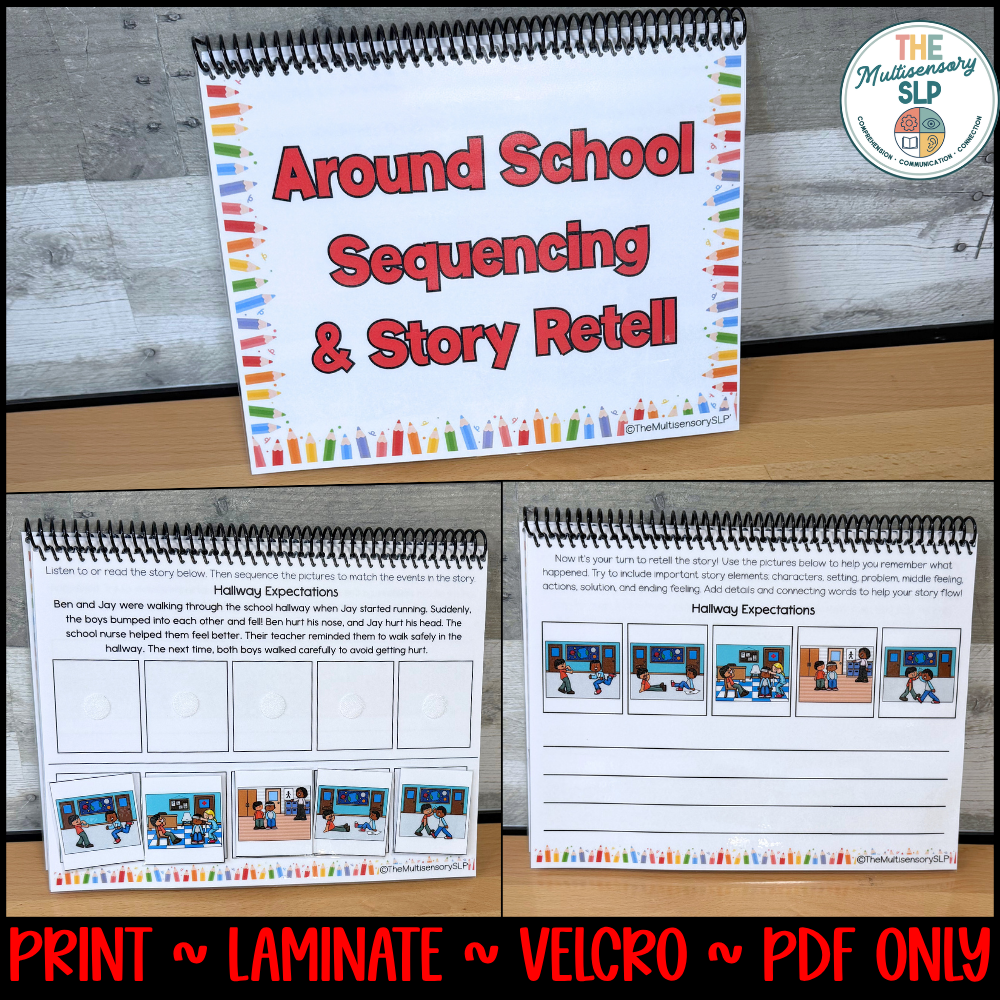
Students first listen to or read a short story and arrange five picture cards in the correct sequence. Then, they use the sequenced pictures to retell the story, focusing on characters, setting, problem, feelings, actions, and solution.
What makes this set different? Students aren’t just practicing the order of events. They’re also exploring why things happen, how behavior affects others, and how characters respond to everyday problems at school.
What’s Included?
- Short narratives featuring familiar school situations and behavioral expectations
- 5 sequencing picture cards for each story
- Hands-on sequencing activity pages
- Story retell pages with visual supports
- Opportunities for verbal or written responses
- Familiar school-based scenarios that encourage discussion of actions, consequences, and problem solving
Skills Targeted
- Sequencing events in a logical order
- Story grammar and narrative retelling
- Cause-and-effect relationships
- Identifying characters, settings, problems, and solutions
- Understanding character feelings and actions
- Recognizing school expectations
- Social inferencing and problem solving
- Oral and written language expression
Flexible Ways to Use
Print and use: Students can cut out and arrange the picture cards on the sequencing pages.
Laminate and reuse: Add Velcro to create reusable sequencing and retelling activities.
Sequence and discuss: Use each story to talk about what happened, why it happened, and how the characters’ choices affected the outcome.
Verbal or written retelling: Students use the visual supports to retell each story aloud or write their responses.
The predictable format supports explicit instruction, modeling, and repeated practice while giving students opportunities to connect narrative language skills with familiar school experiences.
Great for speech-language therapy, special education, social communication instruction, narrative language intervention, and small-group literacy activities.
One resource, two important areas of instruction: narrative language and understanding everyday school situations.
Reviews
There are no reviews yet.