Have you ever felt like you know what to do with AAC users until you master requests… then you hit a wall. You lose the inherently motivating nature of requests. Now what?
Well, after requests, we know an excellent next step is commenting. Why? because working to build commenting skills helps support and build
-joint attention
-story telling/narrative skills
-relationships
-neuroaffirming care
So how do we do that? If you’re like me, you’ve turned to research. What does it say?
-> Well that’s the kicker. Most research into treatment approaches with autistic people are focused on teaching requesting. In an open access article (you read that right-you can access this for free, share it with colleagues, print it and bring it to meetings, hand it to teachers, caregivers, etc.) researchers found the most effective prompting, intervention strategies, and length of utterances to target commenting (in 2-16 year olds)… here we go!
a) Prompting:
The tried and true least to most prompting hierarchies were the most effective to elicit commenting. This must be SYSTEMATIC to be effective. Interestingly the very least effective method is the simple “what’s this?” questioning. Perhaps most powerful, aided modeling in the absence of all other prompting, was found to be moderately to highly effective (second in line behind systematic least to most prompting hierarchies).
b) Treatment Method:
Researchers found that… *drum roll please* shared book reading was the most effective treatment method to elicit commenting. Second in line was play based therapy. Structured activities with intensive teaching were least effective.
c) Length of Utterance… does it matter?
YES. Studies that targeted 2 symbol utterances were significantly more effective than those that targeted single word utterances. To me, this seems to make sense. I’d also be more motivated to make a comment about something if I had something to say about it… like little car, sad cat, etc. rather than just using a single word to label, describe, or draw attention to the object. However, it is important to keep this in mind when working with students.
Literacy, AAC, & a Freebie
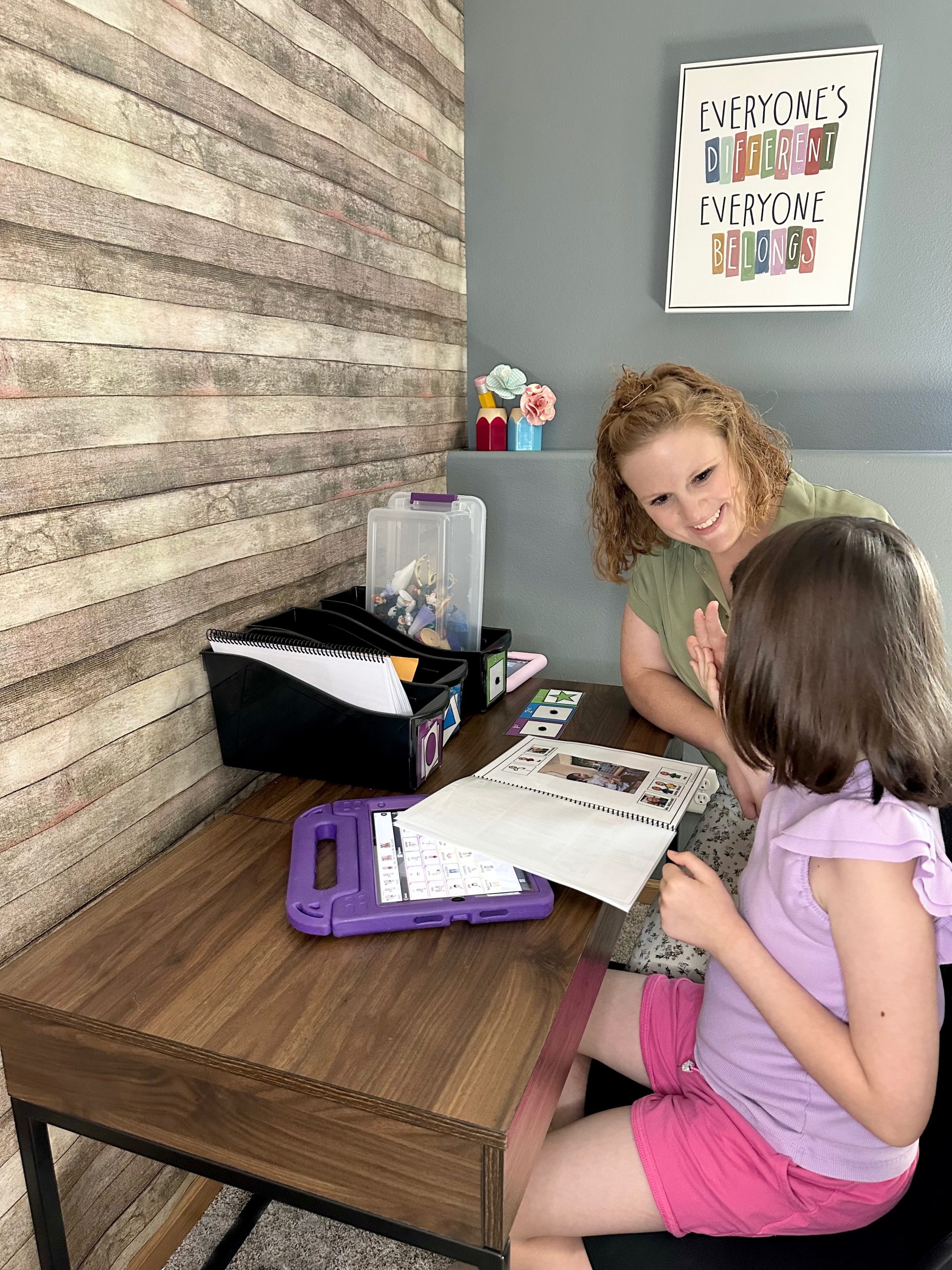
In summary, shared reading is a research-backed, natural way to grow language skills. Interactive, adapted storybooks provide extra support for students who benefit from multisensory learning. Each page features a large, purposeful image—colorful, engaging, and designed to support attention, vision, and language modeling. If you’d like to try a literacy-based approach with your students, subscribe to get access to a free Word of the Week Kit and other resources today!
Citation (open access article-free download)