
Description
Help students explore what plants need to survive and how plants grow with this interactive, standards-aligned science unit designed for students with diverse learning and communication needs.
Developed by a speech-language pathologist, this resource combines real photographs, adapted informational text, core vocabulary, visual supports, and hands-on activities to make foundational science concepts accessible while building comprehension and communication skills.
Students learn about plant needs, growth, and development through repeated exposure to important concepts across several connected activities.
What’s Included
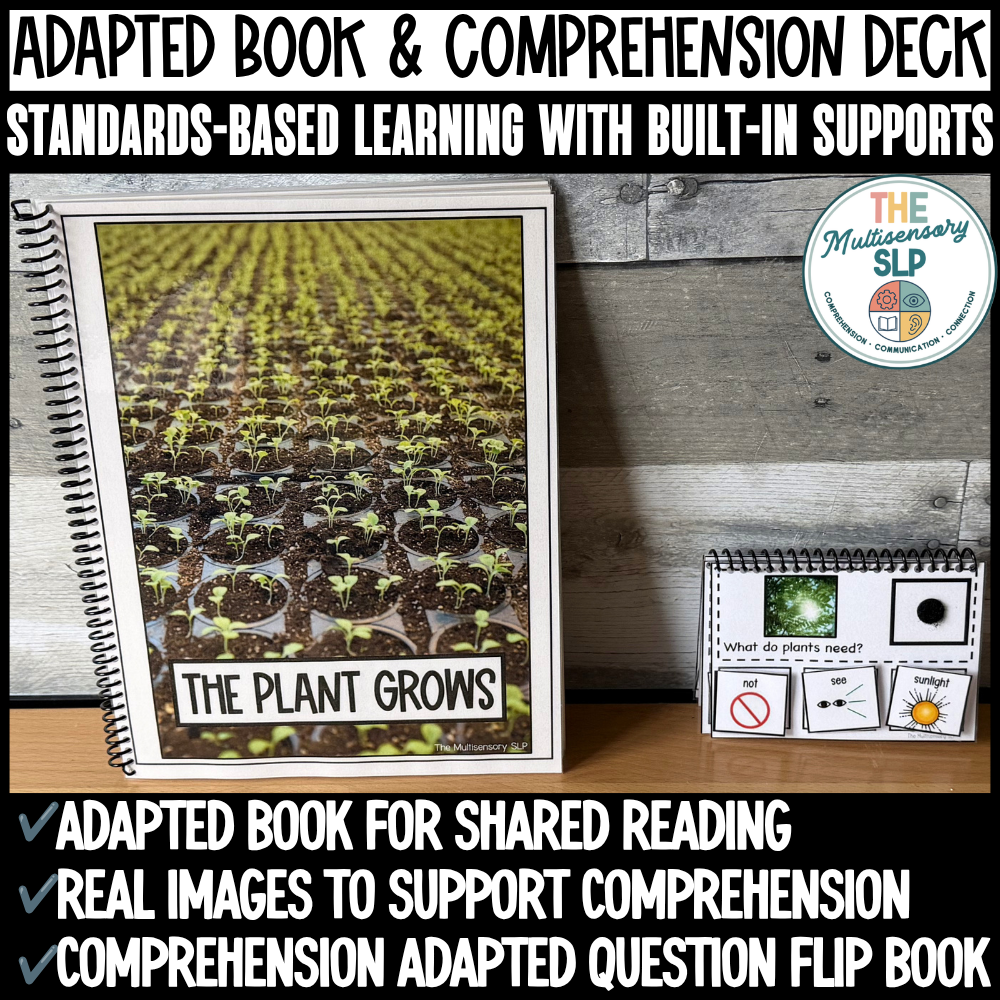
1. Interactive Adapted Book
- 10 pages of accessible informational text
- Real photographs to support comprehension
- Interactive, Velcro-compatible movable pieces
- Short, predictable 2–4 word phrases incorporating core vocabulary
- Opportunities for shared reading and active participation
2. Adapted Comprehension Flip Book
- Interactive questions targeting important information from the book
- Visual response choices
- Practice answering questions, recalling details, and demonstrating understanding
- Compact format for individual or small-group instruction
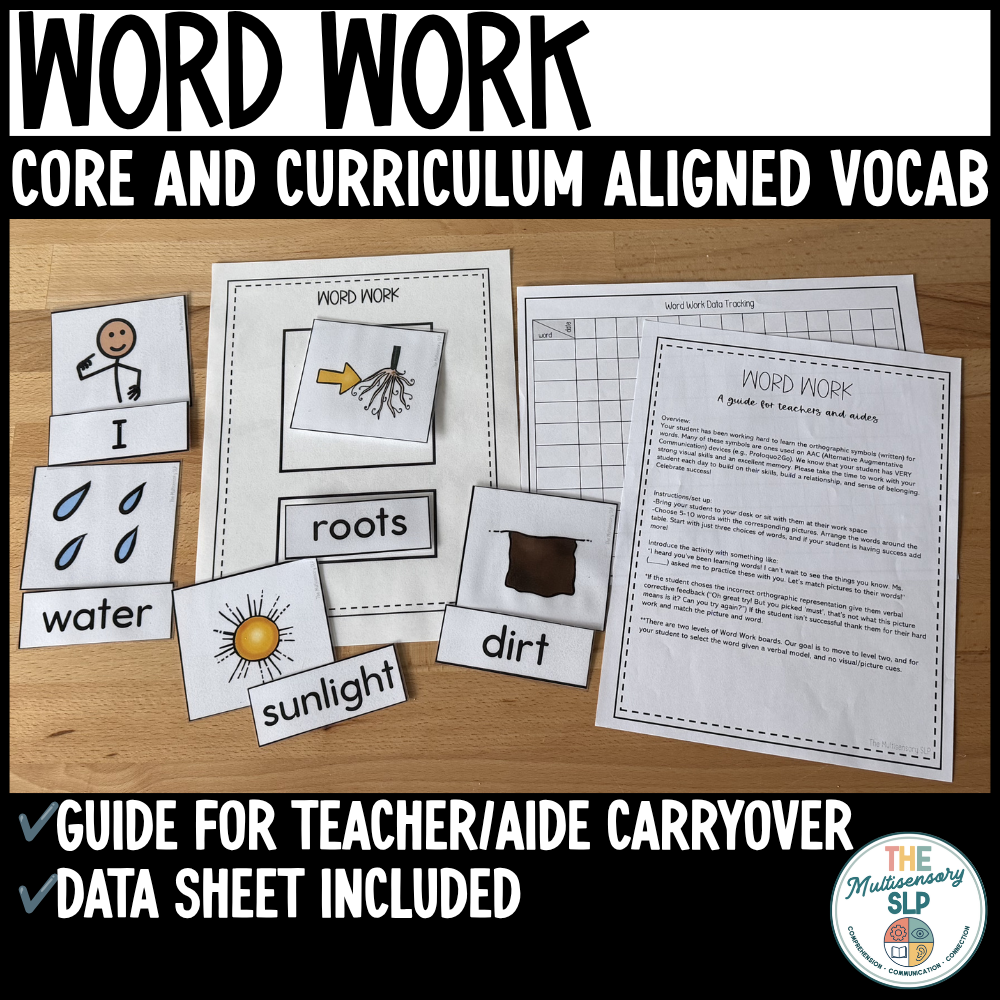
3. Word Work & Vocabulary Activities
- Core vocabulary and curriculum-aligned science vocabulary
- Picture and word matching activities
- Teacher/aide instructional guide
- Data-tracking sheet to monitor student responses and progress
- Opportunities to connect vocabulary to meaningful science concepts
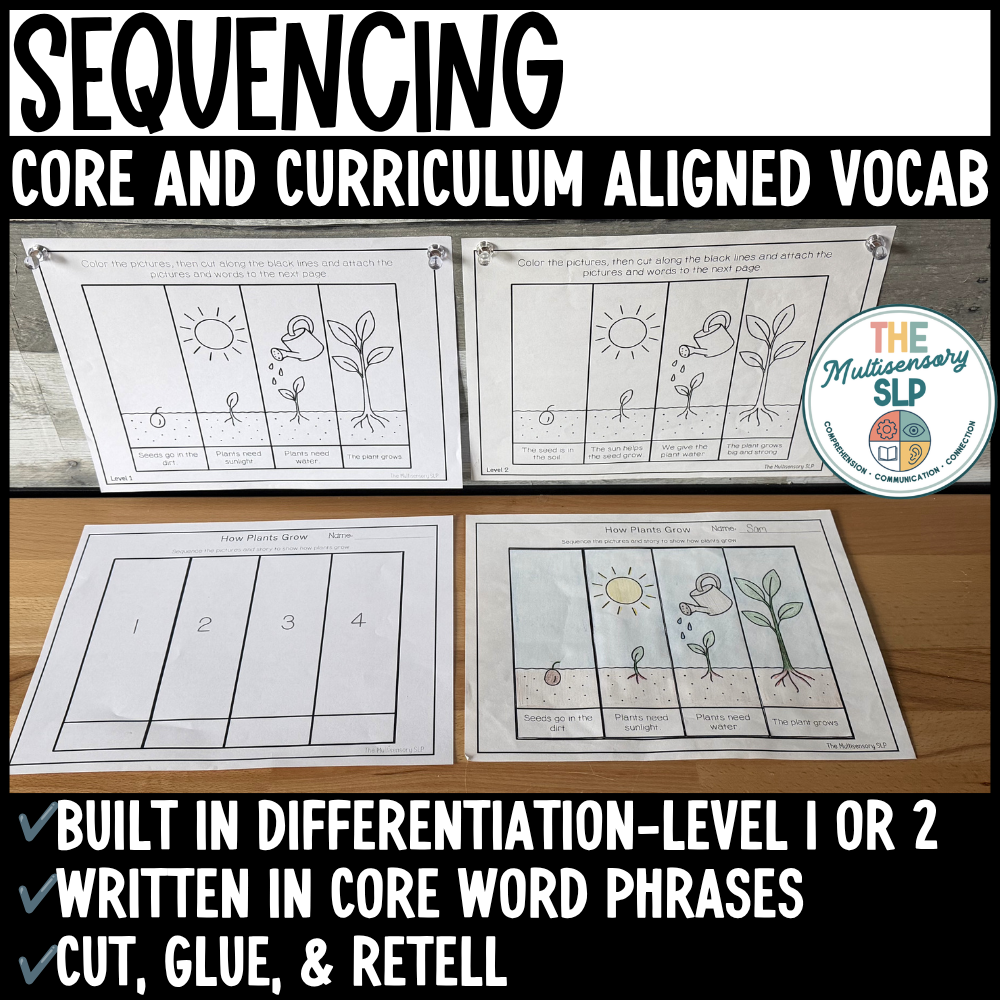
4. Plant Growth Sequencing Activities
- Hands-on cut, glue, and retell activities
- Two differentiated levels of text
- Visual supports for understanding the sequence of plant growth
- Opportunities to practice sequencing, sentence formulation, and retelling
5. Plant Growth Visual Anchor
- Illustrated visual explaining how plants grow
- Reinforces the importance of sunlight and water
- Supports review, vocabulary instruction, and classroom discussion
Skills Targeted
- Identifying what plants need to grow
- Understanding plant growth and development
- Building science and academic vocabulary
- Core vocabulary use and sentence formulation
- Reading and listening comprehension
- Answering WH questions
- Sequencing and retelling
- Expressive and receptive language
Standards Alignment
NGSS K-LS1-1: Use observations to describe patterns of what plants and animals (including humans) need to survive.
Also supports elementary ELA standards related to informational text comprehension, vocabulary acquisition, and communicating information.
Designed For
- Special education classrooms
- AAC users and emergent communicators
- Students with complex communication needs
- Inclusive elementary classrooms
- Speech-language therapy
- Individual, small-group, and whole-group instruction
Built Through a Communication Lens
Science instruction provides meaningful opportunities to develop language, but students with complex communication needs may require additional supports to access and demonstrate their understanding.
This unit intentionally incorporates predictable language, visual supports, repetition, core vocabulary, and motor-based learning activities to support participation in standards-aligned science instruction.
The goal is to teach science content and communication skills together, providing students with multiple opportunities to learn, practice, and demonstrate what they know.
Reviews
There are no reviews yet.