Description
Finding the main idea requires students to do more than identify what a passage is about. They need to recognize which details are important, understand how those details connect, and use information from the text to support their thinking.
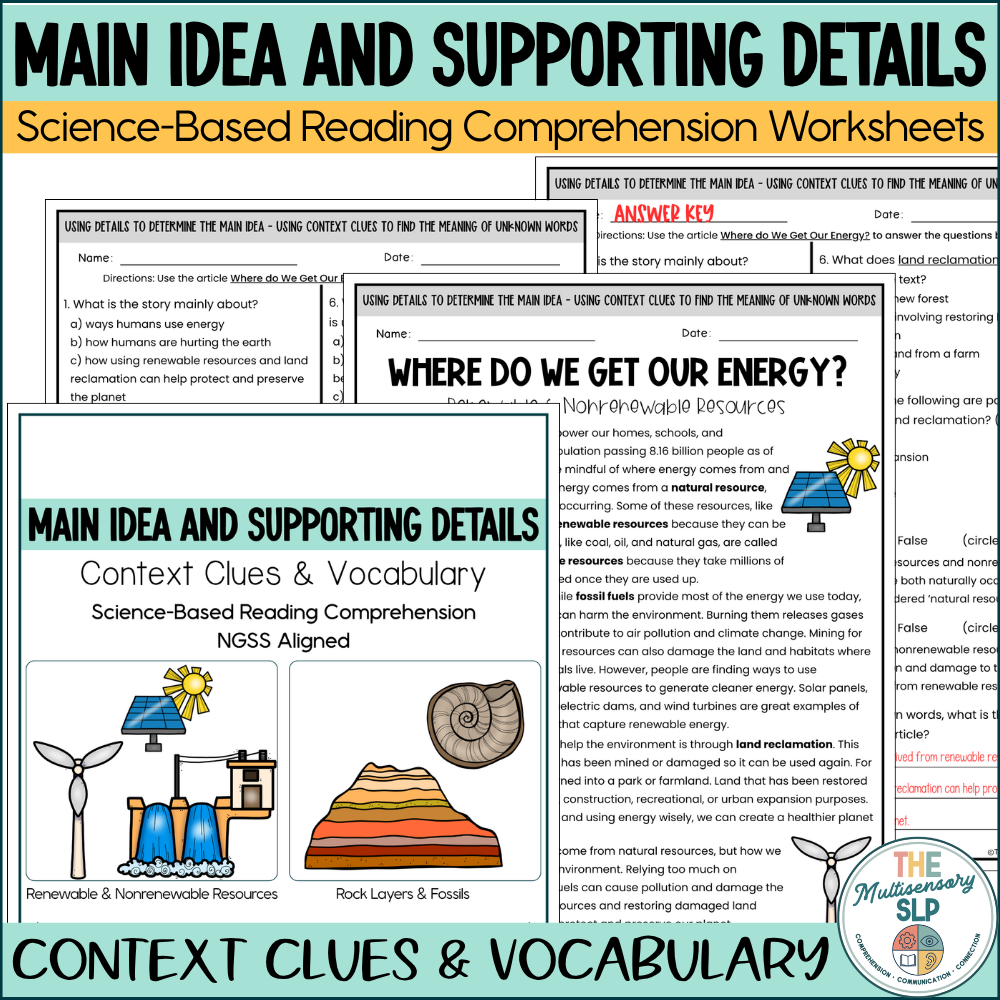
These science-based reading comprehension worksheets give students opportunities to practice identifying the main idea, recognizing supporting details, and using context clues to determine the meaning of unfamiliar vocabulary.
Rather than practicing these skills through unrelated passages, students apply them while learning about real science concepts, including renewable and nonrenewable resources, energy, rock formations, and fossils.
The activities bring together literacy and science instruction, allowing students to strengthen reading comprehension while building knowledge of academic and domain-specific vocabulary.
What’s Included?
- Science-based informational reading passages covering renewable and nonrenewable resources and rock formations
- Main idea and supporting details comprehension questions
- Context clues and vocabulary practice
- Multiple-choice and written-response questions
- Answer keys
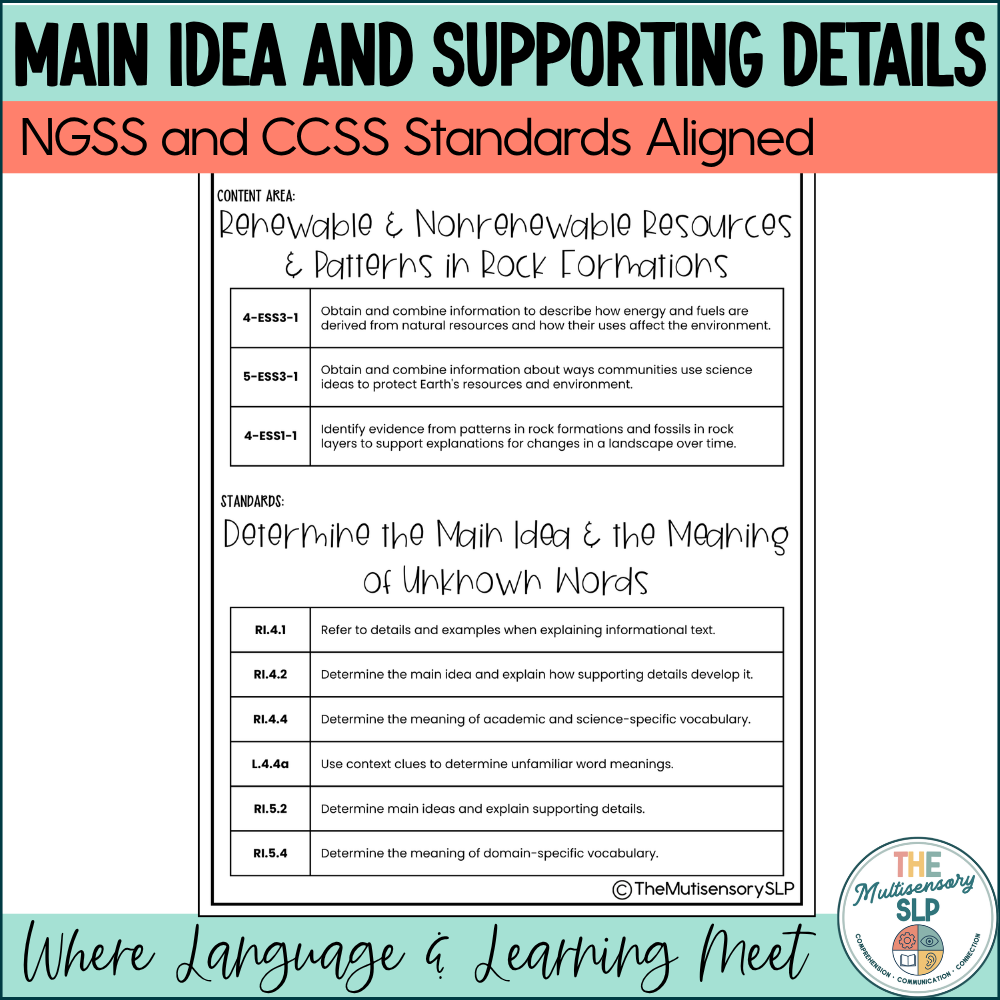
- NGSS and Common Core standards alignment reference
Skills Targeted
- Identifying the main idea
- Recognizing relevant supporting details
- Reading informational text
- Using context clues
- Understanding academic and science-specific vocabulary
- Using text evidence to answer comprehension questions
Standards Alignment
Common Core ELA
- RI.4.1 — Refer to details and examples in informational text
- RI.4.2 — Determine the main idea and explain supporting details
- RI.4.4 — Determine the meaning of academic and domain-specific vocabulary
- L.4.4a — Use context clues to determine word meaning
- RI.5.2 — Identify main ideas and explain supporting details
- RI.5.4 — Determine the meaning of academic and domain-specific vocabulary
Next Generation Science Standards (Supporting Connections)
- 4-ESS3-1 — Energy and fuels derived from natural resources
- 4-ESS1-1 — Patterns in rock formations and fossils
- 5-ESS3-1 — Protecting Earth’s resources and environment
These activities support the science content and vocabulary associated with the NGSS standards while directly targeting ELA reading comprehension skills.
Suggested Uses
Great for upper-elementary reading intervention, speech-language therapy, science literacy instruction, small-group lessons, and independent reading comprehension practice.
Students practice finding the main idea, identifying the details that support it, and using context to make sense of unfamiliar science vocabulary—all within meaningful informational texts.
Reviews
There are no reviews yet.