Description
Making inferences is more than making a guess. Students need to use clues from the text, combine them with what they already know, and explain how they reached their conclusions.
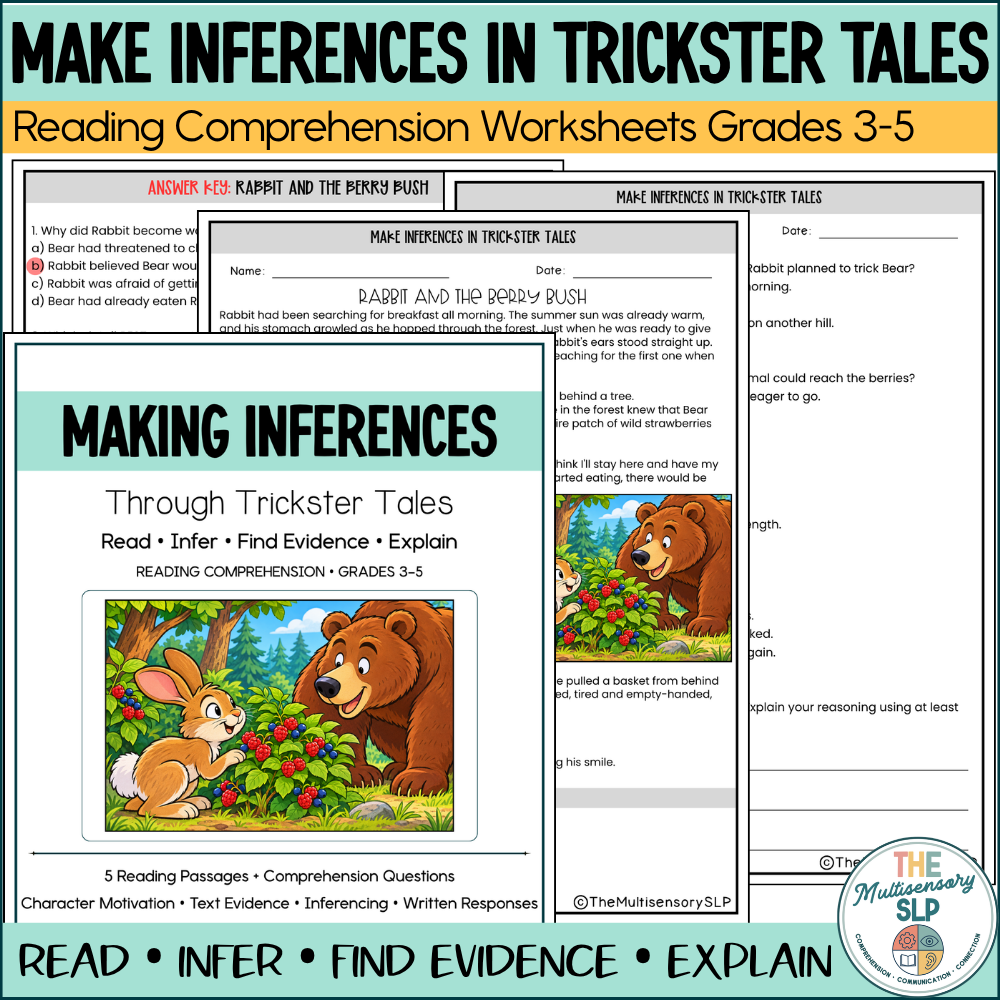
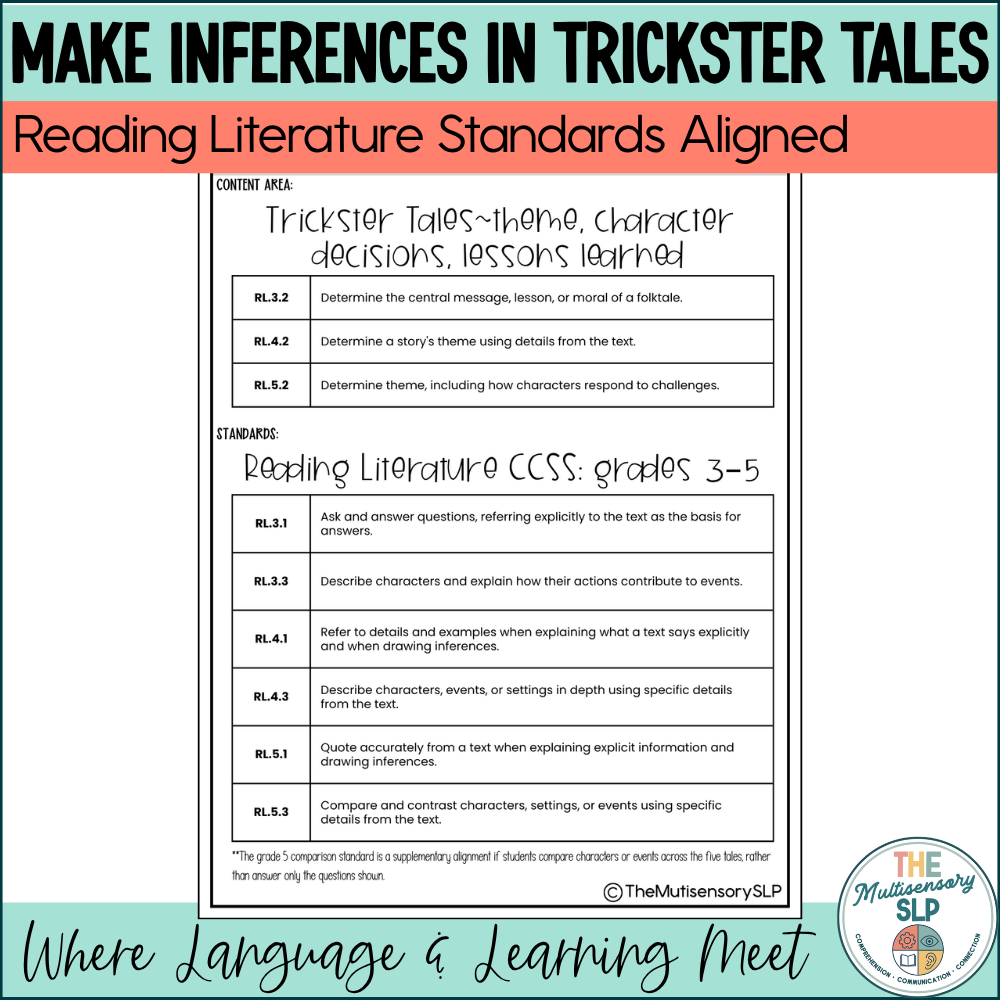
This reading comprehension resource uses engaging trickster tales to help students in grades 3–5 practice making inferences, identifying character motivations, and supporting their thinking with text evidence.
Trickster tales provide opportunities for inferencing because characters often have hidden intentions, make unexpected decisions, or try to outsmart one another. Students must look beyond what a character says or does to figure out whythey acted that way.
Throughout the activities, students practice a consistent process:
READ → INFER → FIND EVIDENCE → EXPLAIN
What’s Included?
- 5 trickster tale reading passages
- Reading comprehension questions for each passage
- Questions targeting character motivation, actions, and intentions
- Opportunities to identify and use text evidence
- Written response activities requiring students to explain their reasoning
- Skills Targeted
- Making inferences
- Reading comprehension
- Character motivation
- Identifying text evidence
- Drawing conclusions
- Explaining reasoning through written responses
Who Is This For?
Designed for students working on approximately grades 3–5 reading comprehension skills, including students who benefit from structured practice with inferencing and explaining their thinking.
Use these activities during reading intervention, speech-language therapy, small-group instruction, or classroom literacy lessons.
Rather than simply asking students to choose an answer, this resource encourages them to show how they know by connecting their inferences to evidence from the text.
Reviews
There are no reviews yet.